
Cat Ba Beyond · Experiences
Deep Water Soloing in Lan Ha Bay: Climbing Where the Rock Meets the Sea
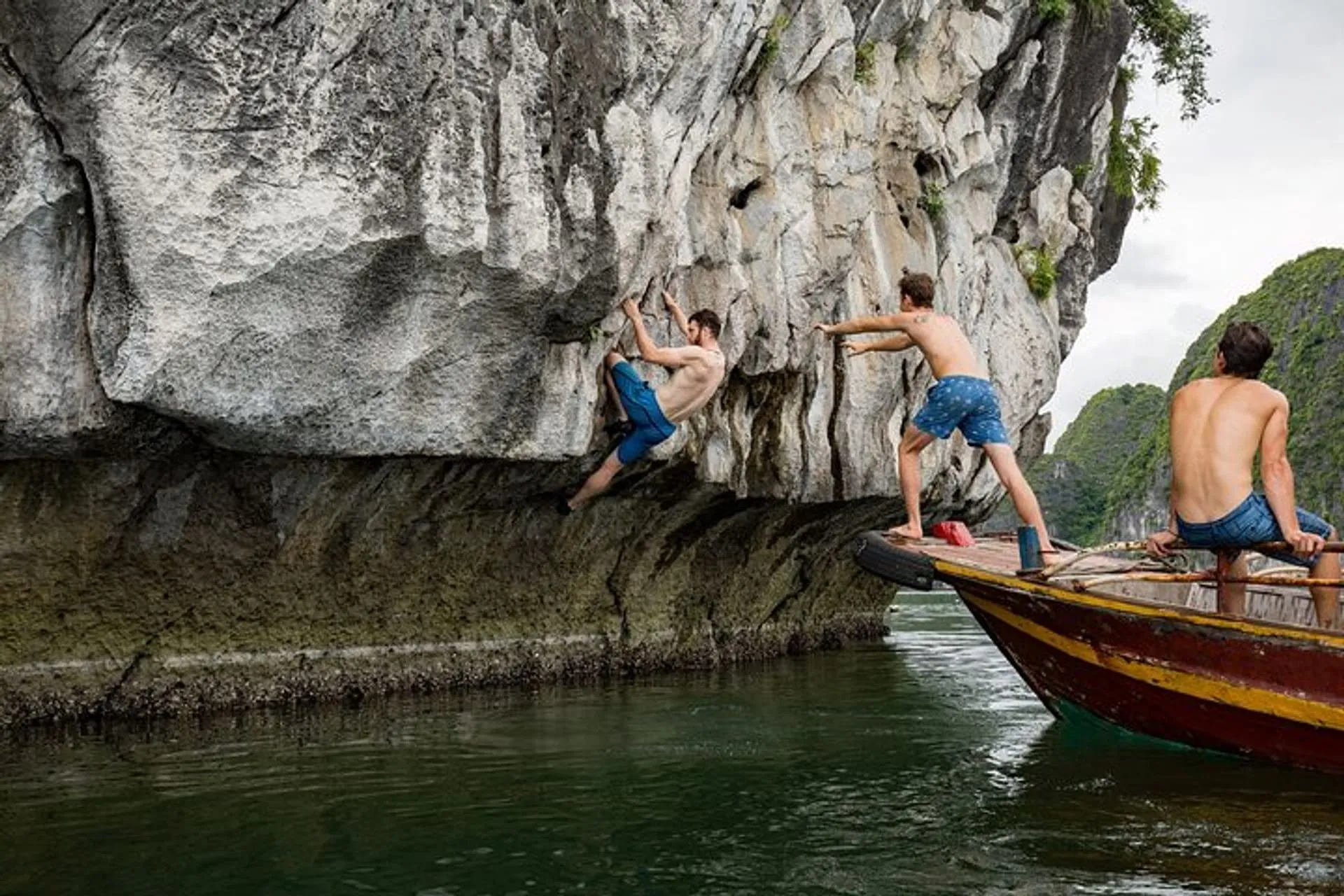
Lan Ha Bay is famous for emerald water, hidden lagoons and limestone islands rising almost vertically from the sea. For adventurous travellers, these cliffs offer more than scenery. They create one of Cat Ba’s most distinctive outdoor experiences: Deep Water Soloing.
Deep Water Soloing, commonly called DWS, is a form of rock climbing performed without ropes or harnesses above deep water. Instead of being caught by a rope, the climber returns to the sea through a controlled jump or fall.
The combination sounds wonderfully simple: rock above, water below. In practice, a safe DWS session depends on suitable cliffs, sufficient water depth, correct landing technique, favourable weather and detailed knowledge of the tides.
What Makes Deep Water Soloing Special?
Traditional climbing focuses on reaching the top while remaining connected to a protection system. DWS offers a different experience. The climber moves freely on the rock, pauses above open water and chooses either to continue or return to the sea.
Lan Ha Bay provides a spectacular setting for this activity. Boats travel between forest-covered limestone islands to reach climbing walls that are inaccessible by road. From the rock, climbers look across quiet water, fishing boats and the layered islands surrounding Cat Ba.
The experience is as much about the journey as the climb. Your day may begin in Cat Ba Town, continue through Ben Beo Harbour and lead into a part of the bay that feels far removed from the island’s busy centre.
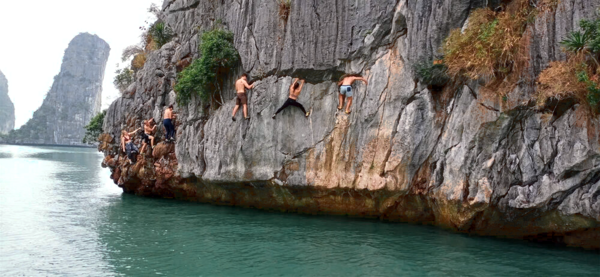
Is DWS Suitable for Beginners?
Beginners may participate in a professionally guided introductory session, but they should be confident swimmers and reasonably comfortable with heights.
A responsible tour starts on a low section of rock. Before climbing, the guide explains how to leave the wall, keep the body upright and enter the water safely. Participants can practise from a manageable height before deciding whether to attempt another route.
Guides select climbs according to ability rather than expecting everyone to follow the same line. Some walls offer a gradual progression from easy routes to more demanding moves. Sea Face, for example, is promoted as an introductory DWS location with routes across several difficulty levels.
Travellers who are uncomfortable in deep water, unable to swim confidently or uncertain about jumping should consider guided top-rope climbing instead. It provides the climbing experience while using a rope and belay system.
Why Do Tides Matter?
Water depth is part of the safety system in Deep Water Soloing. A route that is appropriate at high tide may have insufficient landing depth later in the day.
For this reason, departure times and climbing locations may change. A morning session on one date could become an afternoon session on another. The guide may also replace a planned cliff when the tide, waves or visibility are unsuitable.
This flexibility is essential. A professional operator plans around the conditions rather than forcing the activity to match a fixed schedule.
Before booking, ask whether your departure time is provisional and when the final timing will be confirmed.
What Happens during a DWS Tour?
Most tours begin at an operator’s office in Cat Ba Town. Participants are fitted with climbing shoes and receive instructions about clothing, equipment and personal belongings.
The group then travels to the harbour and boards a boat for the journey into Lan Ha Bay. During the cruise, the guide introduces the climbing grades, route selection, jumping technique, water-entry position and emergency procedures.
At the first wall, participants usually start with an easier route close to the water. The guide observes each climber and recommends suitable progressions. After entering the sea, climbers swim back to the boat or an agreed recovery point.
A half-day tour is generally sufficient for an introduction. It also leaves time for another Cat Ba activity before or after the session. Full-day experiences may include more climbing locations, lunch, swimming or additional time exploring the bay.
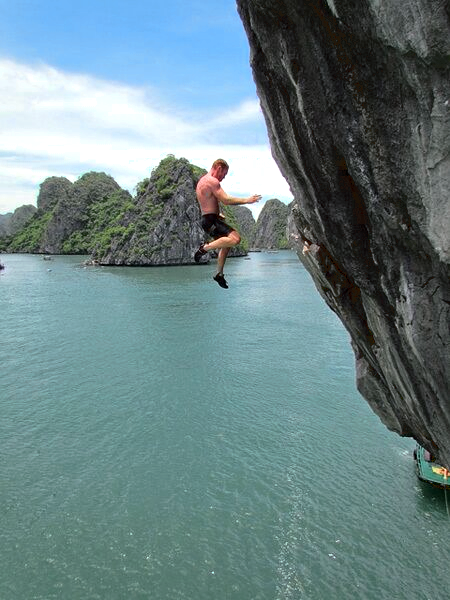
DWS Is More Than Cliff Jumping
Although both activities end in the water, Deep Water Soloing is fundamentally a climbing experience. Participants read the rock, choose holds, manage body position and make decisions as they move higher.
The safest way down is not an uncontrolled fall. Climbers need enough space beneath them, a clear landing zone and the correct body position when entering the sea.
Never jump outward without instructions, attempt flips or push away from the wall simply to create a more dramatic photograph. The guide’s briefing should determine how and where you enter the water.
Choosing a Responsible Operator
Safety depends heavily on the quality of the operator and local guide. Vietnam Tourism specifically notes that safe DWS trips rely on the operator.
Before reserving a tour, confirm:
- The guide’s DWS experience and local knowledge.
- Whether the operator is authorised to run the activity.
- The number of guests assigned to each guide.
- How tides and water depth are assessed.
- Whether a support boat remains at the climbing wall.
- What insurance is included.
- The policy for bad weather or unsuitable conditions.
- Whether climbing shoes and other necessary equipment are provided.
Online photographs may show experienced climbers on high and difficult routes. They should not be treated as a promise that every participant will climb the same wall.
A trustworthy guide recommends routes according to ability and may ask someone to stop when fatigue, technique or conditions make another attempt inappropriate.
What Should You Wear and Bring?
Wear swimwear under flexible clothing that allows unrestricted movement. Lightweight shorts or fitted sportswear work well. Longer clothing can provide some protection from small scratches, although anything worn on the climb will become wet.
Bring:
- A towel and dry change of clothes.
- Sunscreen and a secure hat for the boat.
- Drinking water.
- A waterproof bag for valuables.
- Any personal medication required during the trip.
Remove rings and loose jewellery before climbing. Keep fingernails short, and avoid applying oily sunscreen to your hands immediately before touching the rock.
Climbing shoes should fit closely without causing severe pain. Confirm your shoe size in advance if the operator supplies equipment.
Understanding the Risks
The limestone around Lan Ha Bay can be sharp. Holds may also become slippery from seawater, humidity or rain. Climbing becomes more difficult as forearms tire, even when the route felt manageable at the beginning.
Stop before exhaustion affects your grip or decision-making. Tell the guide immediately if you feel dizzy, unwell or anxious about entering the water.
Never attempt DWS independently on an unfamiliar cliff. The water may look deep while concealing submerged rocks or a shallow shelf. Local restrictions and environmental protections may also apply.
The support boat, guide and safety briefing are central parts of the experience, not optional extras.
Protecting Lan Ha Bay
Climbers share the bay with wildlife, fishing communities and other visitors. Use established locations, avoid vegetation and never damage the rock to create new holds.
Do not leave tape, packaging or other waste behind. Sunscreen, bottles and personal belongings should remain secured on the boat when they are not being used.
Responsible operators should avoid restricted or environmentally sensitive cliffs. Respecting access rules protects both the landscape and the future of climbing in the area.
An Adventure Defined by the Landscape
Deep Water Soloing in Lan Ha Bay is difficult to separate from its surroundings. You approach the cliff by boat, climb above the sea and return directly to the water. Every part of the activity belongs to the landscape.
The most memorable moment may be completing a route, making your first controlled jump or simply pausing on the wall to look across Cat Ba’s limestone islands.
Choose an experienced guide, respect the tide and climb within your ability. Lan Ha Bay will provide the height, the water and a view worth working for.