
Cat Ba Beyond · Tour planning
Does the Cheapest Tour Really Save You Money And Is It Worth it?
A cheap tour can look like an easy victory. The destination appears identical, photographs show the same limestone islands, and the itinerary still mentions kayaking, swimming and lunch. Why pay more?
The difference may become clear only after booking: perhaps entrance tickets cost extra, transfers take longer than expected, kayaking is brief or the group is too large for the guide to answer questions. You might spend less but receive less of the experience you travelled to Cat Ba for.
The cheapest tour is not automatically poor value. It is a bargain when the final price, itinerary and service match what you want.
The advertised price may not be the final price
A low headline rate can become less attractive when essential services are added separately. Ask whether the quotation includes:
- Hotel pickup and return
- Lan Ha Bay entrance tickets
- Kayak or bamboo-boat use
- Lunch and drinking water
- An English-speaking guide
- Insurance
- VAT and service charges
- Weekend or holiday surcharges
- Transfers from Hanoi or another destination
A boat-only price is not directly comparable with a package containing transport, meals, tickets and activities. Request the final payable amount in writing. If the operator cannot explain the inclusions, the saving is uncertain.

Your holiday time also has value
If you have one day for Lan Ha Bay, time spent collecting passengers or waiting at the harbour matters. A lower-priced tour may follow a shorter or busier route; another may simply operate more efficiently. Compare the actual plan, not just the advertised duration:
- When does the boat leave the harbour?
- How many hours are spent on the bay?
- How long is the kayaking session?
- How many passengers will join?
- Are swimming stops planned when conditions allow?
- Which areas does the route visit?
- When will you return?
A nine-hour advertised outing can include considerably less cruising time once transfers and waiting are counted.
The guide can determine the quality of the entire day
Two boats can follow the same route and produce different experiences. A knowledgeable guide can explain how floating aquaculture farms work, why tides affect kayaking, how fishing and tourism have changed Cat Ba and why weather may alter the itinerary. They can give guests context for responsible behaviour in protected environments.
Without that context, Cai Beo may appear to be a row of floating structures viewed through a camera. With local insight, visitors can better understand a living community shaped by fishing, aquaculture, storms, tourism and family histories.

The best tour depends heavily on the right guide
A strong itinerary matters, but the person leading it can be just as important. A guide who knows the island and communicates clearly can connect the landscape to real stories rather than reciting a script. Cat Ba Beyond introduces its locally rooted approach here; ask who will actually guide your departure rather than assuming every trip has the same host.
A good tour is more than transportation between photo stops. Ideally, you should leave understanding Cat Ba more deeply than when you arrived.
A weak guide can make an expensive tour feel cheap
Price and boat comfort do not guarantee expertise. Frustrations can include vague answers, little cultural context, rushed safety briefings, unclear activity instructions, or no communication when the route changes. Ask who guides the tour, what language they speak and how they support guests during kayaking and stops.
Larger groups can reduce the guide’s value
Even a skilled guide needs time and space to interact with guests. In a large group, distributing kayaks, counting passengers and coordinating different paces can consume time. Guests at the back may struggle to hear. Small groups often cost more because fewer people share the boat, fuel, crew and guide expenses; the value is access to the guide and a more adaptable pace, not exclusivity alone.
Cheap tours can hide compromises
A low price can be entirely legitimate when a group is larger or a boat is simpler. The key is understanding the trade-offs before paying:
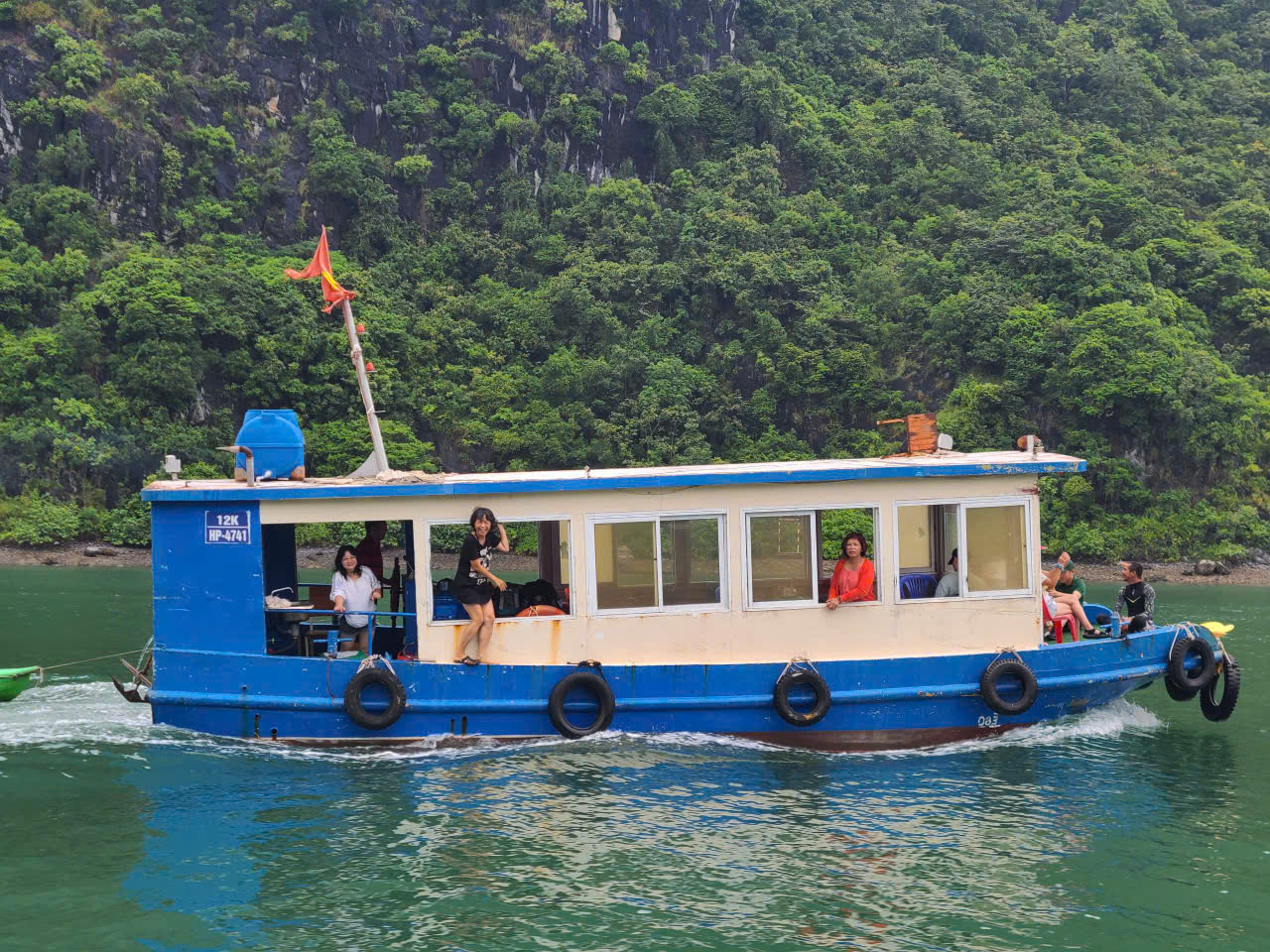
- An older or more basic vessel
- A shorter route or less time kayaking
- More passengers or no dedicated guide
- Simpler meals or activities charged separately
- No hotel pickup
- Stricter cancellation terms
- Replacement boats without clearly stated standards
None is automatically unacceptable. They matter when they differ from what you were led to expect.
When is the cheapest tour a sensible choice?
A transparent budget tour can work well if you mainly want the scenery, enjoy a larger social group, accept a fixed schedule, do not need detailed interpretation and can arrange your own transfers. Confirm every inclusion, the vessel and the route first.
When should you pay more?
Consider a better-supported option if this is your only day on Cat Ba, you want to understand local life, prefer a small group, travel with children or older relatives, need careful kayaking instruction, or value quiet stops and clear English communication. An additional amount may buy better preparation and attention, not only a more elaborate lunch.
Questions to ask before booking
Send these questions to any operator before choosing a price:
- What is the final price after all required fees?
- Which vessel will operate the tour?
- How many guests will be in the group?
- How many hours will we spend on the bay?
- How long are the kayaking and swimming stops?
- Who is the guide, and how familiar are they with Cat Ba?
- What local and environmental information will the guide provide?
- Are entrance tickets, meals and equipment included?
- What happens if the itinerary changes?
- What is the cancellation and bad-weather policy?
Clear, specific answers help you judge an offer. Pressure to pay without basic details is a reason to pause.
The real meaning of saving money
Saving means paying a fair price for the experience you actually want. The cheapest tour saves money only if it still delivers real value. An attentive local guide, transparent inclusions and enough time at each stop may be worth more than the headline discount.