
Cat Ba Beyond · Fishing Life & Local Culture
How Did Children Living on Lan Ha Bay Travel to School?
For children growing up on the floating rafts of Lan Ha Bay, going to school once involved two separate commutes. The first crossed the water; the second continued along the roads of Cat Ba Island.
A parent would take the child from the floating home to shore in a small motorised bamboo boat. After landing, the child might continue by motorbike taxi—known locally as xe ôm—or be driven to school on the family’s own motorbike or vehicle. When classes ended, the entire journey happened again in reverse.
What sounds picturesque to a visitor was, for local families, a demanding daily responsibility shaped by weather, fuel, working hours and the school timetable.
The morning began on a moving platform
A child’s school day started before reaching land. Getting dressed, eating breakfast and preparing books all took place on a floating structure that moved gently with the water.
Uniforms and school materials had to be protected from rain and sea spray. A wet exercise book or uniform could not be replaced easily once the family had left the harbour.
Parents also checked the weather before departure. Wind, fog, heavy rain or rough water could make a familiar crossing slower and less comfortable. The family’s boat and engine needed to be ready before the child could begin the journey.
The first stage: travelling to shore by boat
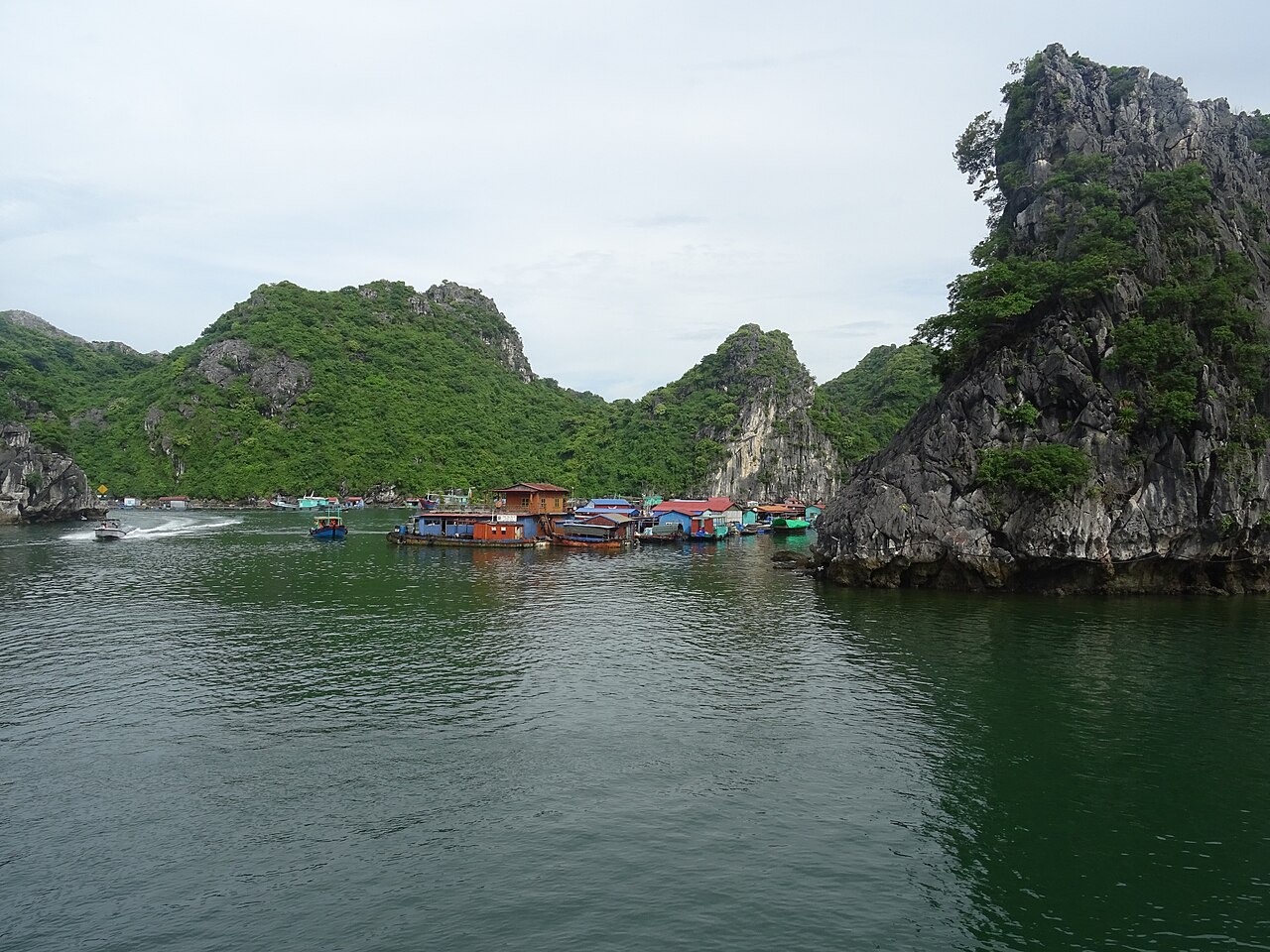
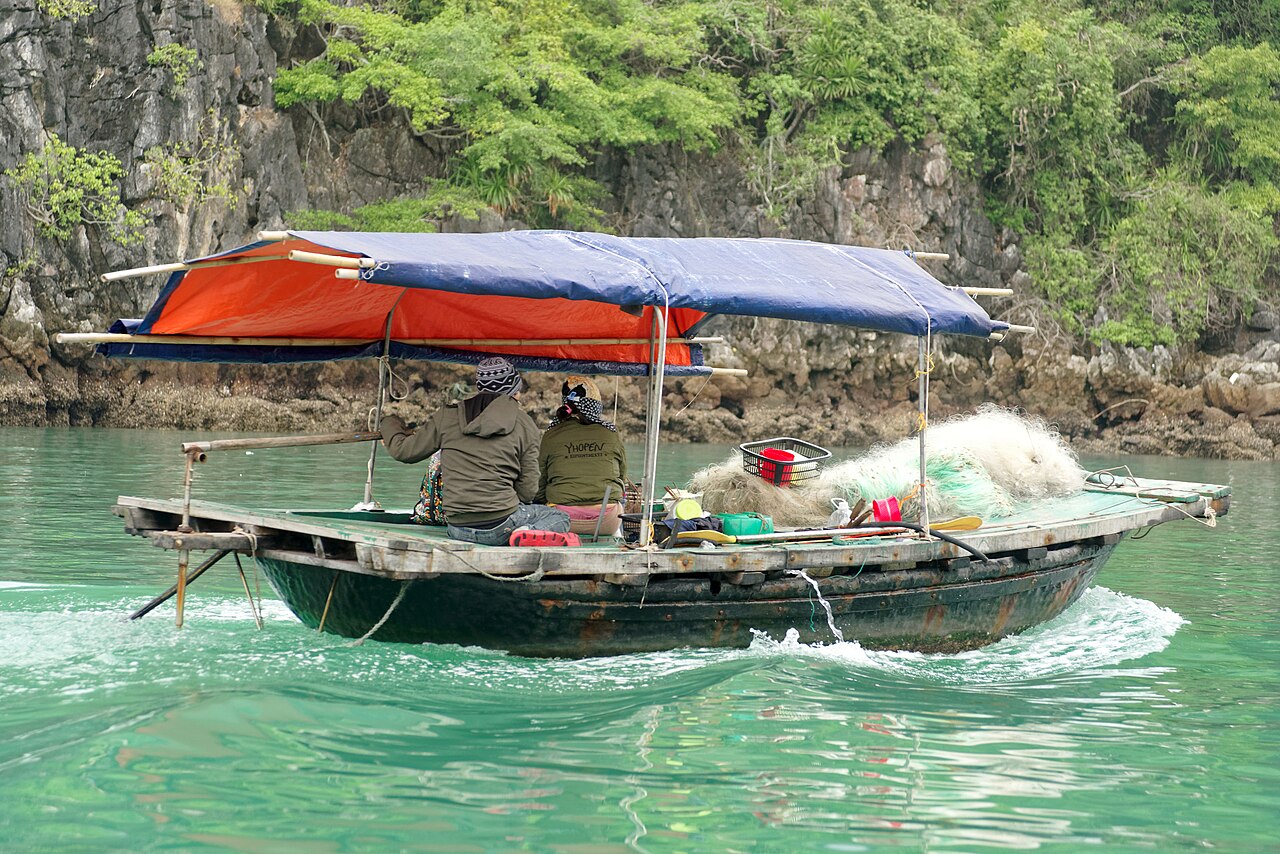
A parent would help the child board the family’s small motorised bamboo boat. These modest craft were essential to daily life on the bay, serving as the household’s connection to markets, medical services, supplies and schools.
The boat travelled between fish cages, floating homes and working vessels before reaching the landing area. The distance varied according to the family’s mooring location.
For a child, this was not a sightseeing trip. It was the regular route between home and the world on land.
A current guide to Cai Beo similarly notes that children from floating households travelled to school by boat, illustrating how strongly daily life remained connected to the water.
Landing did not mean arriving at school
Reaching the harbour completed only the first part of the commute. The school was still elsewhere on Cat Ba Island.
Some children continued by xe ôm, the traditional motorbike-taxi service. In other families, a parent kept a motorbike or another vehicle on land and drove the child from the harbour to school.
This created a carefully coordinated routine:
- Prepare the child and school materials on the raft.
- Leave the floating home by motorised bamboo boat.
- Secure or leave the boat at the harbour.
- Transfer to a motorbike taxi or family vehicle.
- Continue by road to the school.
- Repeat the process after classes.
A delay during either stage could make the child late. Parents had to account for the boat crossing, the transfer at the harbour and road traffic—not merely the distance from the coast to the school.
Parents organised work around the school bell
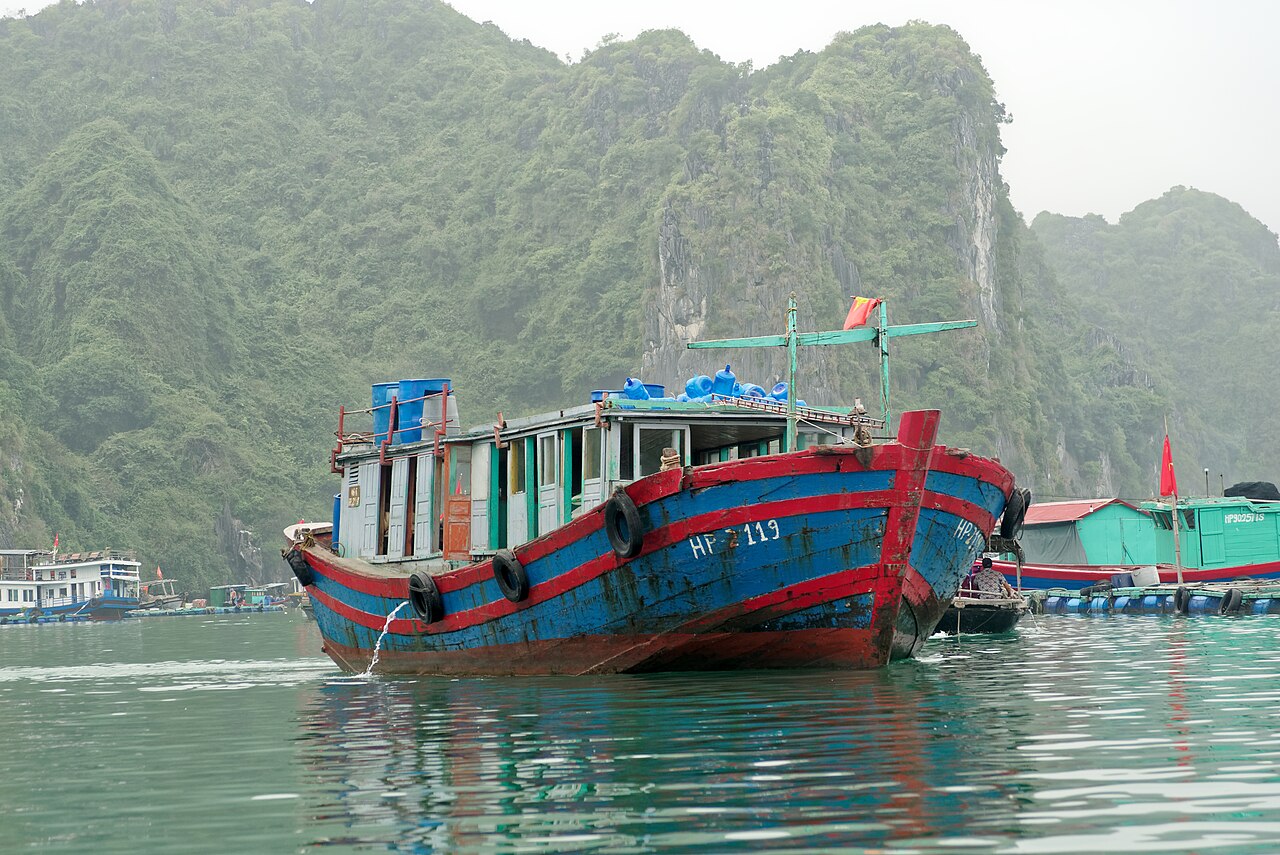
Families living on floating fish farms could not simply leave their workplace unattended. Fish needed feeding, cages required inspection and boats or equipment had to be monitored.
Taking a child to school meant that one parent had to pause work, operate the boat and arrange the road journey. If several children attended different schools or finished at different times, the schedule became more complicated.
The return trip required similar planning. A parent might collect the child directly from school, arrange a motorbike taxi to the harbour or ask a trusted relative to help. Someone then needed to be present with the boat for the final crossing home.
Education was therefore a commitment shared by the household, not only an individual journey made by the child.
What happened after school?
When classes finished, children travelled back to the harbour by the same road method used in the morning. A parent then brought them across the water to the floating home.
If school ended before the boat arrived, the child might need to wait ashore. A late class, changing weather or an engine problem could interrupt the arrangement.
Once home, the child returned not to a conventional street but to a working fish farm. Homework took place near nets, feed, boats and the sounds of water beneath the floor. Children could also have ordinary family responsibilities appropriate to their age, although routines differed between households.
The contrast was distinctive: school belonged to the land, while home and family livelihood remained on the bay.
Weather could control attendance
A route that was easy on a calm morning became more difficult during strong wind, heavy rain or fog. Poor visibility complicated navigation among rafts and boats, while rough water made boarding and landing less comfortable.
Families had to judge whether the crossing was practical. Weather could also worsen during the school day, meaning conditions for the return journey were different from those in the morning.
Mechanical problems created another challenge. A broken engine was not merely a transport inconvenience; it could prevent a child from reaching school or returning home on schedule.
Families therefore depended on working boats, fuel and sometimes help from neighbours.
The journey also cost money
Living close to Cat Ba Town did not make the commute free. Families had to pay for boat fuel, engine maintenance and, when necessary, a motorbike taxi.
There was also the less visible cost of time. Every morning and afternoon journey removed an adult from fishing, aquaculture or household work.
These costs help explain why access to education was more complicated for children living on the water. The school might not have been geographically distant, but the journey crossed two different transport systems.
Not every family followed exactly the same route
Some floating homes were closer to the harbour than others. Some parents owned a motorbike; others depended on xe ôm, relatives or shared arrangements. Children of different ages also had different schools and schedules.
Families changed their routines as circumstances changed. A child might later stay with relatives on land, or the entire household might relocate to Cat Ba Town. Improvements in roads, communications and household income could also affect transport choices.
For this reason, the boat-to-shore and road-to-school journey should be understood as a common local pattern rather than a single rule followed identically by every child.
How has the experience changed?
As floating communities have been reorganised and more families have moved ashore, fewer children now begin every school day from a raft. Younger generations may live in town even when parents continue working at a fish farm.
This can simplify access to school, healthcare and other public services. At the same time, it changes the childhood connection between home, family work and the bay.
The old school journey remains an important part of local memory because it shows the effort families made to connect life on the water with opportunities on land.
More than an unusual commute
Visitors may imagine that travelling to school by boat was an adventure. For local children, it was simply the beginning and end of an ordinary school day.
Behind that routine stood a parent preparing the boat, paying for fuel, arranging road transport, watching the weather and leaving work twice each day. Education required coordination between the entire household.
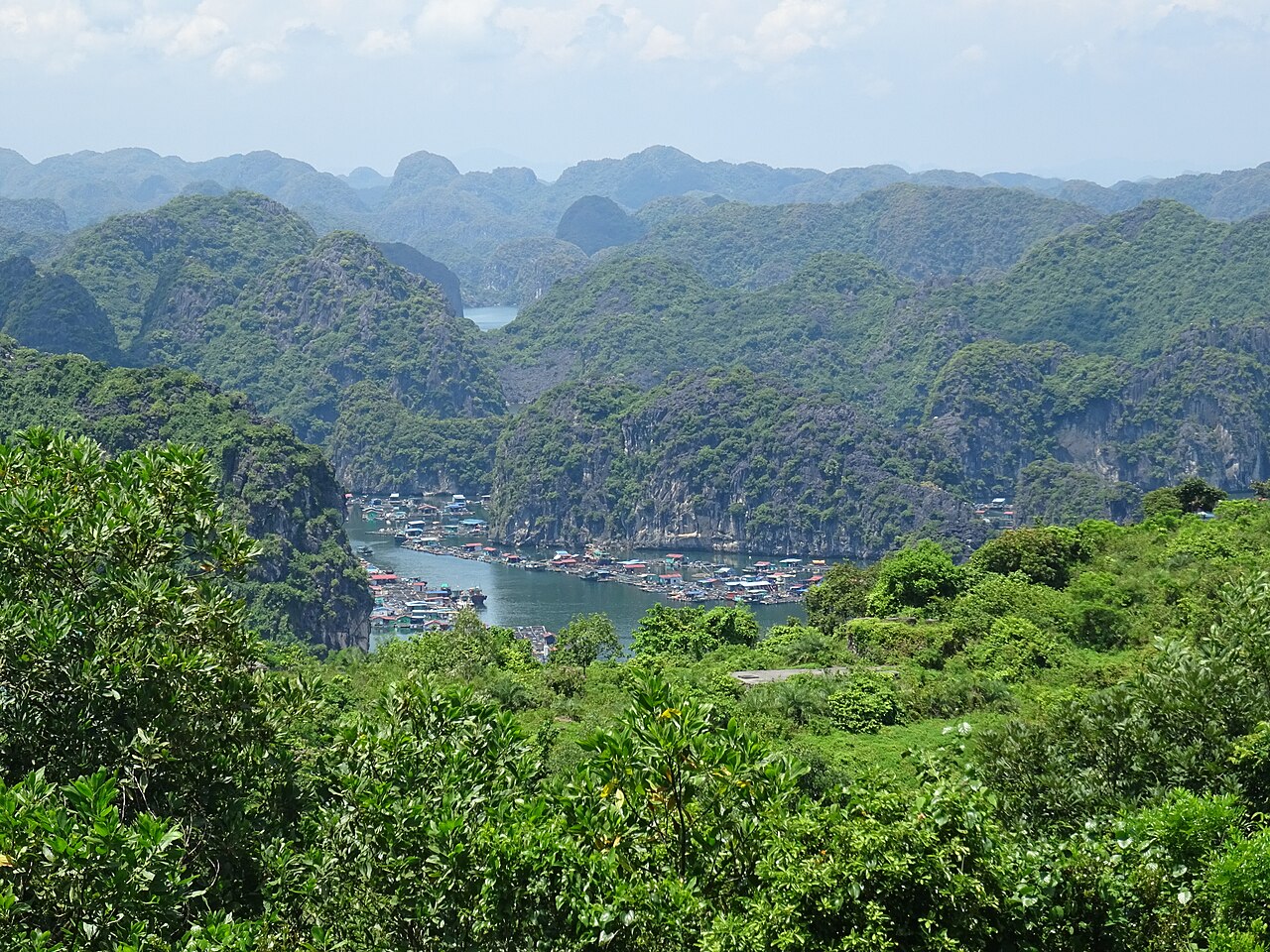
The journey reveals something important about Lan Ha Bay: the floating community was never isolated from life on Cat Ba Island. Boats connected children not only to the shore but also to classrooms, friendships and opportunities beyond the family raft.