
Cat Ba Beyond · Cat Ba National Park & Trekking
Is Cat Ba National Park Worth Visiting?
Cat Ba is often introduced through emerald water, floating villages and cruises across Lan Ha Bay. Yet the island’s character does not end at the shoreline. Behind the beaches lies a landscape of limestone mountains, tropical forest, caves and isolated valleys. Cat Ba National Park is where visitors can experience this quieter, wilder side of the island.
So, is Cat Ba National Park worth visiting? Yes—particularly if you enjoy hiking, nature or want to understand why the Cat Ba Archipelago is environmentally significant. However, choosing the right route is essential, because the park offers everything from short walks to demanding full-day treks.
What makes Cat Ba National Park special?
The national park covers 17,362.96 hectares of terrestrial and marine environments. It protects limestone forest, caves, mangroves and habitats associated with the Cat Ba langur—an exceptionally rare primate found naturally only in this archipelago. Visitors should not expect to see one during a normal hike, however. This is a protected ecosystem, not a wildlife park where animal sightings are guaranteed.
The main entrance is approximately 15 kilometres from Cat Ba Town. The journey takes you along the island’s cross-island road, passing limestone cliffs, forest, local settlements and farmland. The drive itself reveals how different inland Cat Ba feels from the busy waterfront.
Kim Giao Forest and Ngu Lam Peak
For first-time visitors, the most practical experience combines Kim Giao Forest with the climb to Ngu Lam Peak. The return route is approximately three kilometres and normally requires around two to two-and-a-half hours, depending on fitness, weather and rest stops.
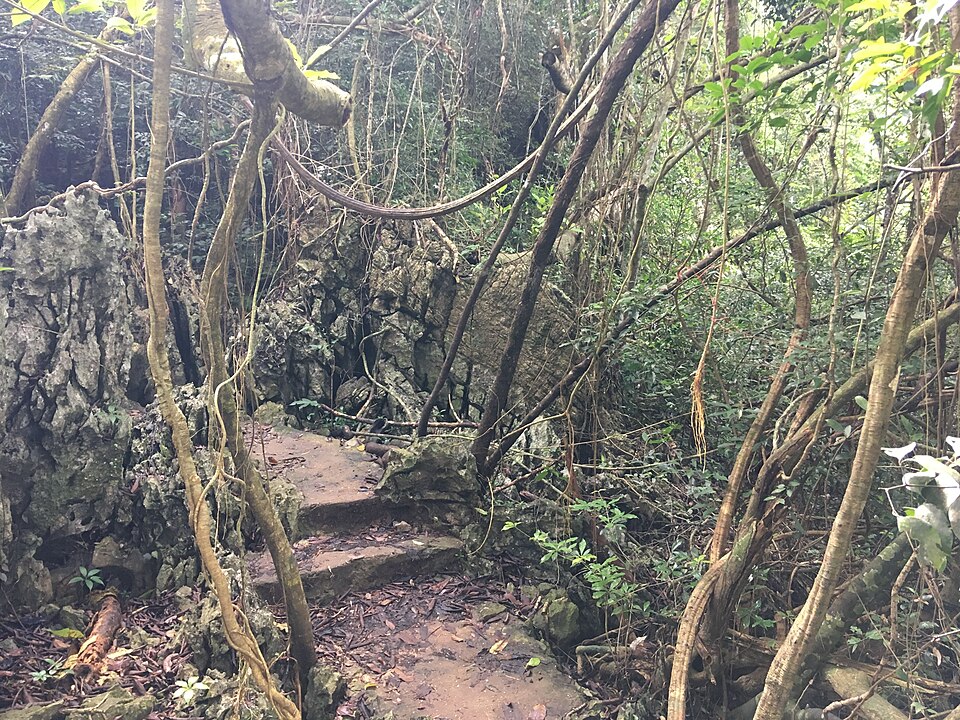
The trail begins beneath a dense forest canopy before becoming steeper. Expect stone steps, exposed roots, sharp limestone and occasionally slippery ground. It is manageable for reasonably active travelers, but it should not be treated as an effortless sightseeing walk.
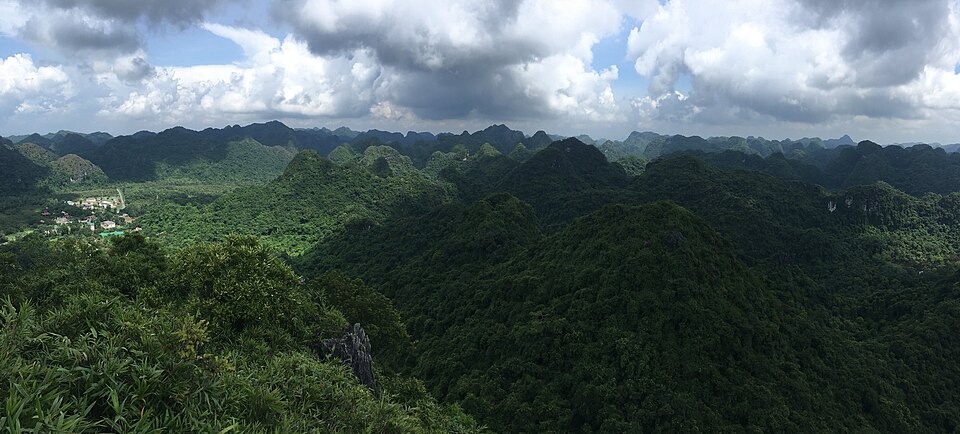
The reward is a series of viewpoints over forest-covered karst peaks. On a clear day, the scenery appears as layers of green limestone ridges stretching across the island. Mist or low cloud may reduce visibility, so starting early and checking the forecast can make a significant difference.
Is Trung Trang Cave worth adding?
Trung Trang Cave is a convenient addition for travelers who want more variety without committing to a long trek. The cave extends approximately 300 metres through a limestone mountain and usually takes 30–45 minutes to explore.
Inside, narrow passages, stalactites and humid chambers create a completely different atmosphere from the open forest. Some surfaces can be wet and uneven, so shoes with reliable grip remain important. Travelers uncomfortable in confined spaces may prefer to spend more time on the outdoor trails.
Trung Trang Cave may be included with certain national park ticket options, but prices and inclusions can differ by route. Confirm what your ticket covers before entering.
What about the longer trek to Viet Hai?
Adventurous travelers can consider longer routes through the park toward Viet Hai Village. These journeys reveal a more remote landscape of forest, limestone valleys and rural communities, but they require more preparation than the Ngu Lam route.
Transport at the finishing point, weather conditions, navigation and sufficient daylight must all be considered. For longer treks, arranging an experienced local guide is highly recommended. A knowledgeable guide adds more than directions: they can explain local plants, conservation, island history and the relationship between the forest and nearby communities.
When should you visit?
Visitor guides commonly list daytime access, roughly from 7:00 a.m. to 5:00 p.m., but published hours differ and access can change because of weather, maintenance or management requirements. Confirm the current opening time with the park before your visit. The Kim Giao–Ngu Lam route is best started in the morning, when temperatures are generally more comfortable and there is enough time to complete the walk without rushing.
Wear lightweight clothing and closed shoes with good traction. Bring water, insect repellent, sunscreen, a hat and a light rain jacket. After rain, stone steps and roots can become particularly slippery.
A published 2026 visitor guide quotes route-dependent entrance charges of approximately VND 80,000–160,000, but fees, visitor categories and inclusions can change. Check the latest ticket information with the park before traveling.
Who might not enjoy the park?
The main trails may not be suitable for visitors with limited mobility, serious knee problems or very young children unfamiliar with uneven terrain. Travelers with only one day on Cat Ba may also prefer to prioritize Lan Ha Bay, especially if boating and kayaking are their main interests.
That does not make the park less worthwhile—it simply means it should match your expectations. Cat Ba National Park is not a polished attraction built around entertainment. Its value lies in walking through a real protected landscape, accepting changing weather and slowing down enough to notice the island beyond its beaches.
The verdict
Cat Ba National Park is worth visiting if you want an active and meaningful addition to your island itinerary. A half-day visit to Kim Giao Forest, Ngu Lam Peak and Trung Trang Cave offers a balanced introduction. Experienced hikers can go farther with a properly planned route toward Viet Hai.
Cat Ba Beyond can help you select an itinerary suited to your available time, fitness level and the day’s weather—so your visit becomes more than a quick climb for a photograph.