
Cat Ba Beyond · Experiences
Kayaking in Lan Ha Bay: A Journey into the Beauty of Cat Ba
Some places can be admired from a distance, but Lan Ha Bay is at its most beautiful when you approach its cliffs, water caves and green lagoons hidden among the islands. Kayaking offers a slower, more personal way to explore: without the sound of an engine, you hear your paddle touch the water as the limestone landscape comes into view.
To the east of Cat Ba Island, Lan Ha Bay forms part of the Ha Long Bay – Cat Ba Archipelago World Natural Heritage property. The entire heritage area includes 1,133 islands and islets with distinctive limestone karst scenery.
Why Go Kayaking in Lan Ha Bay?
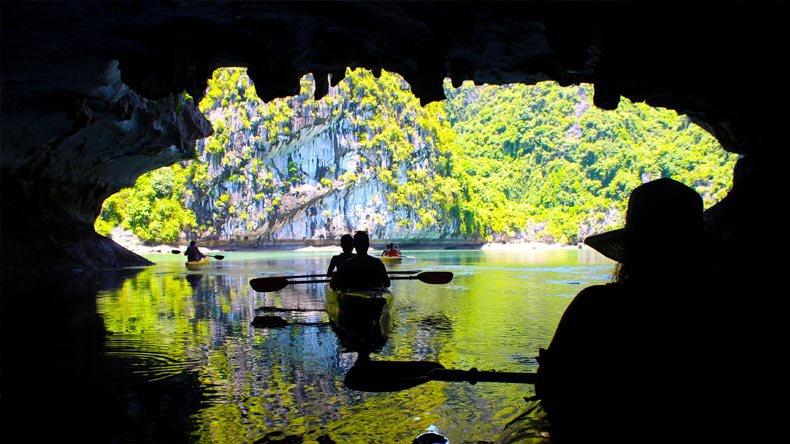
A sightseeing boat gives you a broad view of the bay, while a kayak takes you into spaces larger vessels find difficult to reach. From close to the water, you can paddle beneath rock arches, follow the foot of an island and enter lagoons enclosed by limestone mountains.
Some Lan Ha Bay itineraries include kayaking around Bright and Dark Cave, Tra Bau or near Ba Trai Dao. The actual paddling location may change with the tide, weather, water conditions and daily management rules. New routes connecting Lan Ha with places such as Cai Beo, Viet Hai and Ba Trai Dao are also opening up more choices for visitors.

Can Beginners Go Kayaking?
You do not need professional experience to join. Most tourist kayaks are doubles and can suit beginners when the weather is favourable and you receive instructions before getting on the water.
The person in front sets the paddling rhythm; the person behind helps steer. To turn, paddle more strongly on the opposite side. Keep your body balanced, do not stand up in the kayak and keep your hands away from rock faces when passing through narrow areas.
If you are travelling with children, older adults or anyone who cannot swim, tell the organiser in advance. A life jacket remains essential even if you are a confident swimmer.
What Happens During a Kayaking Session?
You will usually reach the kayaking area by sightseeing boat or cruise vessel. The guide hands out life jackets and paddles, explains how to get in and out, and defines the area you are allowed to explore.
A session usually allows time for a short route, a photo stop and a return to the meeting point. It is not a race. Paddling slowly helps conserve energy, makes the kayak easier to control and gives you time to notice the layers of rock, greenery and still water beyond a cave arch.
When the water is calm, the bay reflects the islands like a mirror. Beyond a low cave entrance, the space may suddenly open into an enclosed lagoon with only birdsong and the gentle movement of water. Vietnam’s tourism information website also presents this as one of the most intimate ways to experience Lan Ha Bay.
Which Kayaking Tour Should You Choose?
For a first visit to Cat Ba, a Lan Ha Bay day tour is easy to fit into your plans. It usually combines sightseeing, kayaking and a meal, with swimming sometimes included when conditions allow.
A half-day tour suits visitors with less time. An overnight cruise is an option for those who want to experience the bay early in the morning or later in the afternoon, when it is often quieter.
Before booking, check:
- Whether kayaking is included in the tour price.
- The planned location and length of the session.
- Whether a guide paddles with you or only gives a briefing at the launch point.
- Whether life jackets, paddles and waterproof bags are provided.
- How the schedule changes when weather conditions are unsafe.
- Whether transfers, entrance fees, meals and drinks are included.
A good tour should explain the actual experience clearly instead of simply listing “kayaking included” on its itinerary.
When Is a Good Time to Kayak?
Daylight, light wind and stable water conditions are ideal. Weather at sea can change quickly, however. Tides also affect access through some water caves and to small beaches.
Keep your plans flexible and follow the captain’s or guide’s decision. If wind, waves or tides require a change of kayaking location, that adjustment is usually necessary for safety.
What Should You Bring?
Quick-drying clothing, sandals with heel straps or water shoes make getting in and out of a kayak easier. Bring sunscreen, a hat with a retaining strap and a personal water bottle.
Keep your phone, camera and documents in a securely closed waterproof bag. Do not leave valuables loose in the kayak: an unexpected movement could send them overboard.
Packing lightly helps keep the kayak balanced and makes the whole journey more comfortable.
Safety Rules to Remember
Always wear a correctly sized life jacket with every buckle fastened. Do not leave the group, enter dark caves or approach areas with moving boats without permission. Keep your distance from rock faces, especially when there are waves.
If the kayak becomes unstable, stay calm, hold on to it and follow the support team’s instructions. Tell your guide if you feel tired, dizzy or uncomfortable instead of trying to continue.
Do not touch wildlife, collect shells or marine creatures, or leave rubbish behind. The Cat Ba Archipelago has high biodiversity value and is home to the critically endangered Cat Ba langur.
A Closer View of Cat Ba
Kayaking in Lan Ha Bay does not require you to go far or paddle quickly. What stays with you is the moment your kayak glides through a rock arch, the water becomes still and the view ahead is filled with the colours of the sea, forest and limestone islands.
If you want an active experience that brings you closer to nature, kayaking deserves a place in your Cat Ba itinerary.