
Cat Ba Beyond · Activities
Shared vs Private Kayaking Tours—What Is the Difference?
Two visitors can kayak through the same part of Lan Ha Bay and have very different experiences. One may paddle with a lively group on a fixed itinerary; the other may travel with a private guide and spend more time inside a quiet lagoon.
The scenery may be similar, but the price, pace, level of support and flexibility are not. Understanding these differences will help you choose the right tour rather than simply booking the cheapest option.
What is a shared kayaking tour?
A shared tour brings together travellers who booked separately. The cost of the boat, guide, crew and logistics is distributed across the group, making this the more affordable choice.
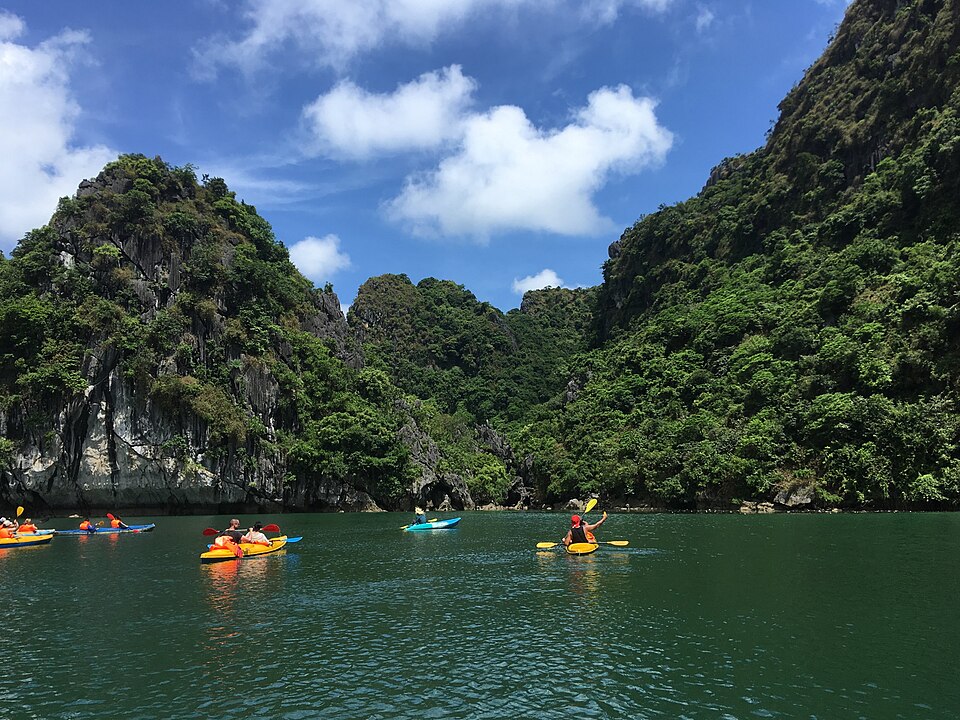
The departure time, cruise route, lunch and kayaking session normally follow a published schedule. When the boat arrives at the paddling area, guests receive equipment and safety instructions before launching in pairs or small groups.
You must generally follow the group’s timing. This can involve waiting while other guests enter their kayaks, returning when the guide calls the group back and accepting that the pace must suit several ability levels.
Shared tours are often a good choice for:
- Solo travellers
- Couples with a limited budget
- First-time visitors
- People who enjoy a social atmosphere
- Travellers who want transport, meals and activities arranged together
Some cruise packages include kayaking, while others treat it as an optional activity. Confirm this before paying rather than assuming that equipment and a guide are included.
What is a private kayaking tour?
A private tour is reserved for your party. Depending on the package, you may have a private kayaking guide, a private support boat or both.
The main advantage is personalised pacing. Beginners can receive additional instruction without feeling hurried, while experienced paddlers may be able to cover a longer route. Families can schedule more breaks, and photographers can spend longer composing images when conditions allow.
A private tour may suit:
- Families with children
- Couples seeking privacy
- Travellers with limited mobility
- Nervous beginners
- Experienced paddlers
- Photographers and content creators
- Groups celebrating a special occasion
Some private products offer a boat reserved for one party and more control over kayaking, swimming and beach time. Exact arrangements vary significantly, so review the inclusions carefully.
The main differences
| Factor | Shared tour | Private tour |
|---|---|---|
| Price | Lower per person | Higher total price |
| Schedule | Fixed | More adaptable |
| Paddling pace | Based on the group | Based on your party |
| Privacy | Limited | Greater |
| Guide attention | Shared among guests | More personal |
| Waiting time | Usually longer | Usually shorter |
| Route choice | Predetermined | Potentially adjustable |
| Social experience | Easy to meet others | Limited to your party |
| Best for | Budget and solo travel | Families and special needs |
Private does not mean that every detail can be changed. The captain and guide must still follow authorised routes, harbour instructions and activity regulations.
Does a private tour provide access to secret places?
Not necessarily. A private booking does not allow a boat to enter prohibited zones, closed caves or environmentally restricted areas. Kayaking must still take place in permitted locations.
Tides, weather and visibility may also prevent access to a planned cave or lagoon. If the water rises too close to a cave roof or a current becomes unsafe, the guide should select another route.
Be cautious if a seller promises unrestricted access or guarantees that you will reach every named location. A responsible private guide offers flexibility within safety and management rules—not freedom to ignore them.
Which tour provides more kayaking time?
A private trip often gives travellers more control over how their available time is used. If your party wants to paddle rather than swim or relax on a beach, the guide may be able to adjust the balance.
On a shared cruise, the advertised “kayaking time” may include distributing equipment, giving instructions, launching multiple kayaks and gathering the group afterwards. Ask about the expected time actually spent paddling.
A private tour can reduce waiting, but it does not automatically guarantee a longer route. The duration still depends on the package, tide, weather and departure point.
Which option is better for beginners?
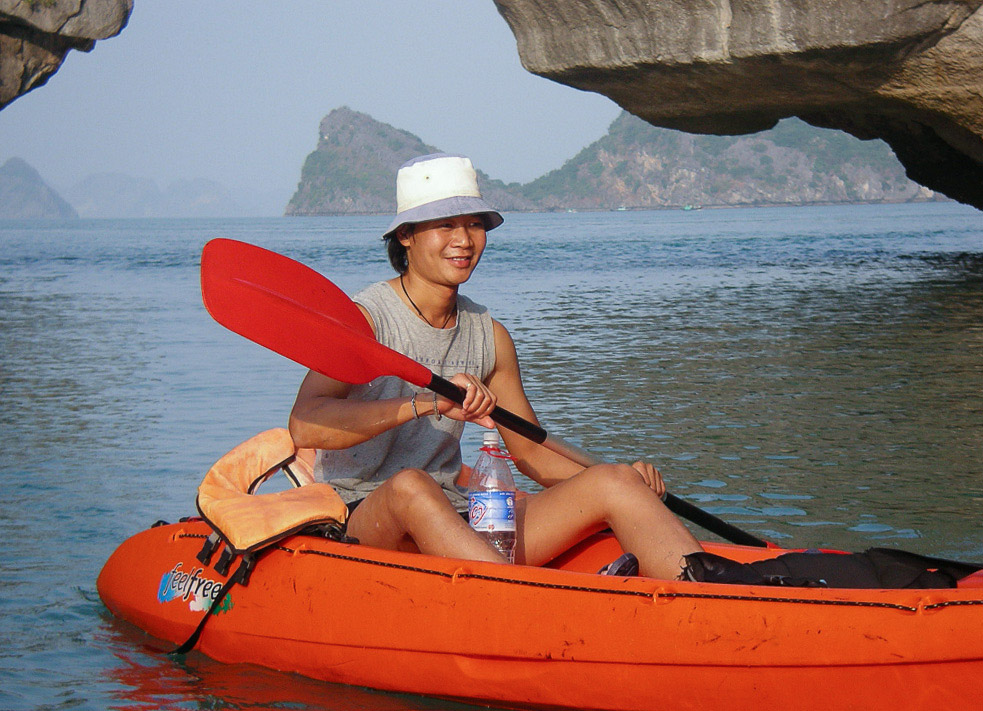
Both formats can be suitable, but group size and guide attention matter. A well-managed shared tour can provide clear instruction and a safe beginner route. However, someone who is nervous, unable to swim or unfamiliar with paddling may prefer a private guide who can remain nearby and move at a slower pace.
Before booking, ask:
- Does the guide accompany guests on the water?
- How many kayaks does one guide supervise?
- Is a support boat nearby?
- Are single and double kayaks available?
- What happens if someone wants to stop early?
- Are child-sized life jackets provided?
The answers are more valuable than the words “shared” or “private” alone.
Which option is better for families?
A private tour is often easier for families because the pace can reflect the children’s energy and confidence. Parents may request a shorter kayaking session, remain closer to the support boat or take more breaks.
Nevertheless, private tours can be expensive for a small family. Compare the total private price with the combined cost of shared tickets. For a larger family, the difference may be smaller than expected.
Always provide the children’s ages and approximate sizes before booking so the operator can confirm suitable life jackets and kayak arrangements.
How should you compare prices?
Do not compare only the headline amount. One tour may include transfers, entrance tickets, lunch, drinking water, kayak equipment and a guide, while another charges separately.
Confirm whether the price is:
- Per person
- Per kayak
- Per private boat
- Per guide
- Based on a minimum group size
Also ask about taxes, harbour fees, hotel transfers and cancellation conditions. A cheap shared tour with several additional charges may offer less value than a clearly priced alternative.
Guide quality matters more than the label
A private tour with an inexperienced guide is not automatically better than a well-organised shared tour. The guide should understand local tides, currents, weather and permitted routes. They should also explain the landscape and local life rather than treating kayaking as a rushed photo stop.
Likewise, a shared tour can feel personal when the group is kept manageable and the guide remains engaged. Ask about the maximum number of guests instead of relying on terms such as “small group,” which different companies may interpret differently.
Which should you choose?
Choose a shared kayaking tour if price, convenience and meeting other travellers are your priorities. It is often the simplest way to combine cruising, lunch, swimming and kayaking in one programme.
Choose a private tour if you value personal guidance, flexible pacing, privacy or additional support for children and beginners. It may also be worthwhile when your party is large enough to divide the total cost.
Neither format is always superior. The best choice is the tour with suitable equipment, realistic timings, an experienced guide and clear answers about what is included.