
Cat Ba Beyond · Experiences
Top-Rope Climbing in Lan Ha Bay and Cat Ba Island: A Beginner-Friendly Adventure
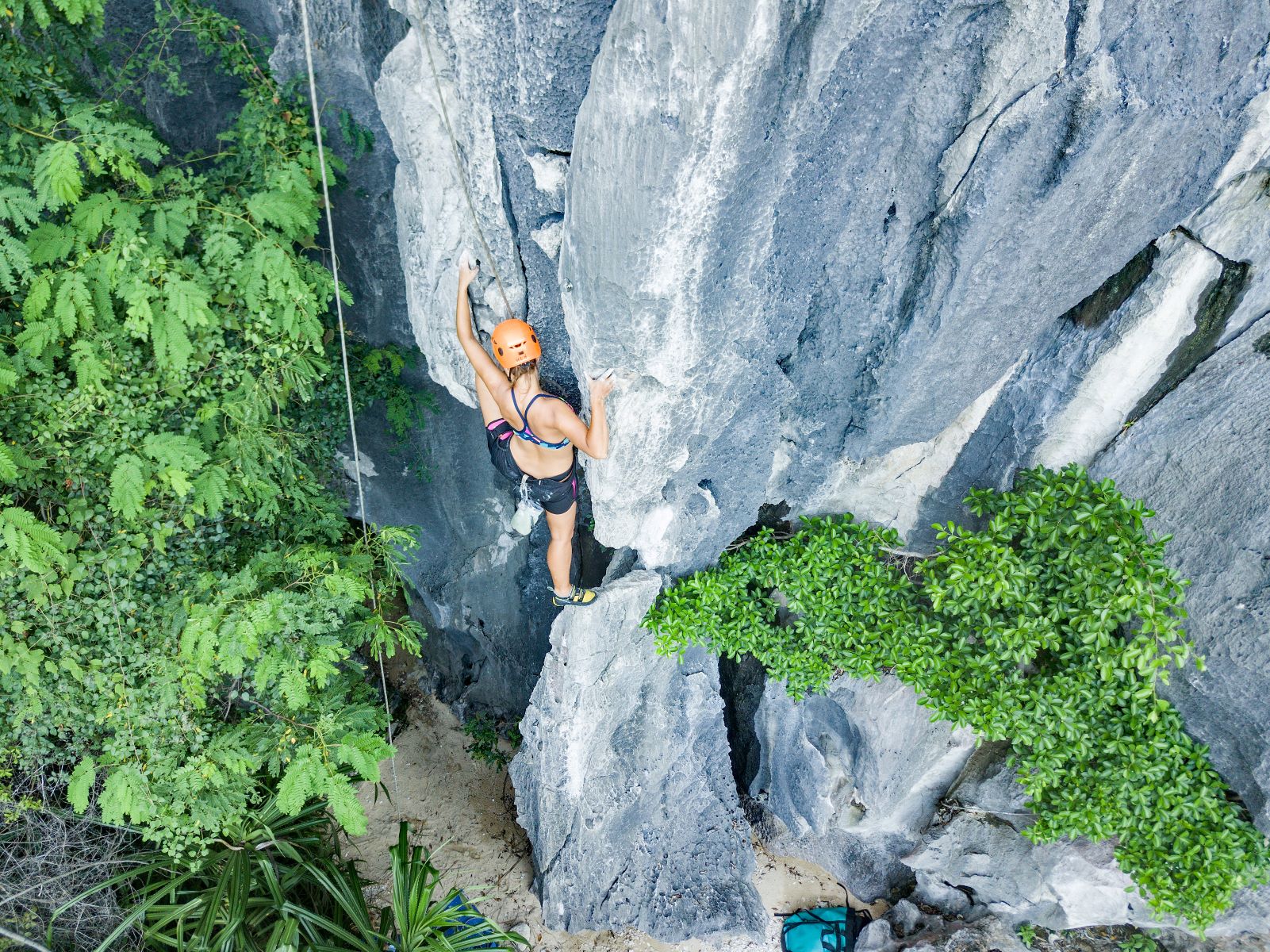
A rope runs from your harness to an anchor at the top of the cliff and back down to a guide standing below. As you climb, the guide takes in the slack. If your hands slip, the rope catches you.
That simple system makes top-rope climbing one of the most approachable ways to experience the limestone cliffs of Cat Ba Island and Lan Ha Bay. Beginners can learn the fundamentals in a controlled setting, while experienced climbers can focus on technique and attempt routes that match their ability.
The reward extends beyond completing a climb. From a seaside wall, you may look across emerald water and forest-covered islands. At an inland crag, you climb among the dramatic limestone formations that define the Cat Ba landscape.
What Is Top-Rope Climbing?
In top-rope climbing, the rope is secured through an anchor above the route. One end connects to the climber’s harness, while the other is controlled by a belayer on the ground.
Because the rope remains above the climber, a fall is usually short when the system is managed correctly. This allows newcomers to practise foot placement, balance and body position without needing to install protection while climbing.
Top-rope climbing differs from lead climbing, where the climber clips the rope into protection points while ascending. It also differs from Deep Water Soloing, where participants climb without ropes above the sea.
For a first outdoor climbing experience, top-rope is generally the most suitable of the three.
Where Can You Climb?
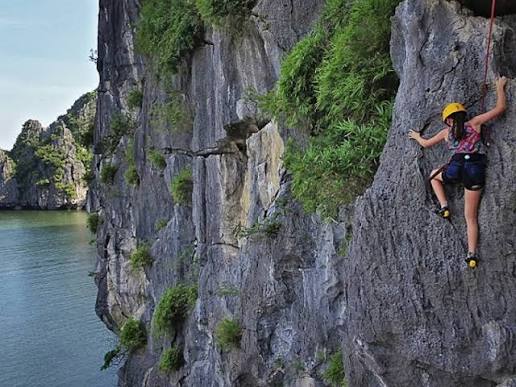
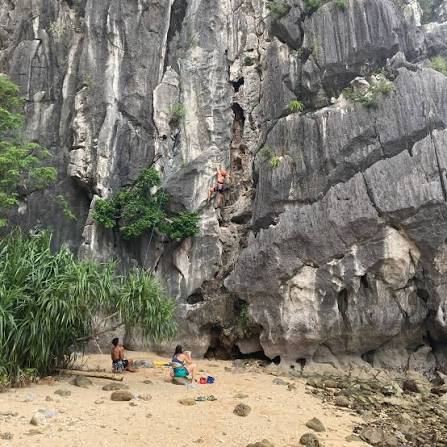
Guided climbing sessions may take place at inland crags on Cat Ba Island or at beach cliffs reached by boat in Lan Ha Bay.
Moody Beach is one recognised climbing location in the bay. Its limestone wall offers mainly vertical routes across beginner and intermediate grades. According to a local operator, the routes range from approximately 4c to 6b+, and guides set up top ropes according to each participant’s strength and experience.
Inland climbing on Cat Ba provides a different atmosphere. Instead of approaching the cliff by boat, participants travel across the island towards established limestone crags. These locations can offer longer climbing sessions without depending as heavily on sea conditions.
The climbing site may change according to weather, access restrictions, rock conditions and the ability of the group. Confirm the planned location before departure, but remain open to a safer alternative when conditions require it.
Is Top-Rope Climbing Suitable for Beginners?
No previous climbing experience is normally required for an introductory session. A qualified guide should explain the equipment, demonstrate basic techniques and select a route appropriate for your confidence and physical ability.
You do not need exceptional upper-body strength. Good climbing relies heavily on footwork, balance and efficient movement. Beginners often become tired because they pull too much with their arms instead of using their legs.
A guide can help you identify stable footholds, keep your hips closer to the wall and rest in balanced positions. You climb at your own pace, and you can ask to be lowered whenever you wish.
Travellers with medical conditions, previous injuries or concerns about heights should discuss them with the operator before booking. The guide can then determine whether the activity and available routes are appropriate.
What Happens during a Guided Session?
A climbing trip usually begins with equipment fitting. The operator provides a helmet, harness, climbing shoes and technical equipment. Your guide checks the fit and introduces the commands used between climber and belayer.
For a Lan Ha Bay session, the group may travel to the harbour and continue by boat to the climbing beach. An island-based tour normally uses road transport followed by a short walk to the crag.
At the wall, the guide installs or checks the rope system and explains the boundaries of the climbing area. Beginners practise basic movements on an easier route before progressing to more difficult climbs.
The guide remains below, manages the rope and offers instructions. After reaching the top or deciding to stop, the climber is lowered carefully to the ground.
A half-day tour provides enough time for an introduction and several attempts, depending on group size. A full-day programme may include more routes, lunch and time to rest between climbs.
How to Choose the Right Tour
A useful tour description should explain more than the destination. Before booking, confirm:
- Whether the session is top-rope, lead climbing or a combination.
- The route grades available for your experience level.
- The maximum number of participants.
- The number and qualifications of the guides.
- The equipment included in the price.
- Transport by road or boat.
- Entrance fees, meals and drinking water.
- Travel insurance coverage.
- The policy for rain or unsafe conditions.
Group size matters. A large group sharing one rope may spend more time waiting than climbing. Ask how many climbing lines are normally prepared and how much climbing time each participant can expect.
If you are already an experienced climber, tell the operator which grading system you use and the level you climb comfortably. The guide can recommend routes more accurately and explain whether lead climbing is available after a skills assessment.
What Should You Wear and Bring?
Choose flexible sportswear that allows you to raise your knees and move freely. Lightweight trousers or longer shorts can protect your legs from small scratches on the limestone.
Bring sunscreen, drinking water and any personal medication you may need. For climbing locations reached by boat, pack swimwear, a towel and dry clothes. Keep your phone and valuables inside a waterproof bag.
Remove rings and loose jewellery before climbing. Long hair should be tied back so it cannot interfere with the helmet or belay equipment.
Climbing shoes should fit closely, but they should not cause severe pain. Send your shoe size when booking if the operator provides footwear.
Essential Safety Checks
Top-rope climbing uses a protective system, but its safety depends on correct equipment and attentive people.
Before every climb, the guide and climber should check the harness, knot, rope and belay device. Listen carefully to the communication commands and use the same agreed terms throughout the session.
Wear your helmet while near the cliff, not only while climbing. Small pieces of rock or equipment can fall from above.
Stay outside the fall zone when another guest is climbing. Do not handle ropes, anchors or technical equipment unless the guide has instructed you to do so.
Fatigue affects grip, balance and judgement. Rest between attempts, drink water and stop when your movement becomes uncontrolled. Tell the guide immediately if you feel dizzy, unwell or unsafe.
Weather and Rock Conditions
Limestone can become slippery when wet. Rain, humidity and seawater may reduce friction on holds, while strong wind can affect boat travel and exposed climbing locations.
The operator may move the group to another crag, delay the session or cancel the activity when conditions are unsuitable. A flexible itinerary is part of responsible outdoor climbing.
Do not attempt to climb independently simply because bolts or an existing route are visible. Equipment condition, access rules and environmental restrictions may not be obvious from the ground.
Climbing Responsibly in Cat Ba
Cat Ba and Lan Ha Bay are sensitive natural environments. Use established climbing areas and follow local access rules.
Avoid damaging plants, disturbing wildlife or creating new holds. Do not leave tape, food packaging or plastic bottles at the crag. Everything brought into the climbing area should leave with you.
Travelling with an operator that understands local permissions helps protect both participants and the landscape.
The Moment You Leave the Ground
Top-rope climbing changes how you experience Cat Ba. A limestone wall that once seemed like part of the scenery becomes a sequence of holds, ledges and small decisions.
You place one foot higher, shift your weight and discover that the next move is possible. When you pause and look behind you, Lan Ha Bay stretches between the islands below.
That combination of concentration, movement and scenery makes top-rope climbing more than another holiday activity. It offers a safe introduction to outdoor climbing and a new perspective on one of Vietnam’s most remarkable island landscapes.