
Cat Ba Beyond · Fishing Life & Local Culture
What Is a Day Like for a Family Living on a Floating Raft?
A floating home on Lan Ha Bay may look peaceful from the deck of a passing cruise. The house rises gently with the water, fish move beneath the walkways, and limestone islands surround the family in almost every direction.
Behind that calm view is a working household. Fish must be fed, nets inspected, supplies transported and mooring lines maintained. Weather can reorganise the entire day without warning.
No two families follow exactly the same routine. Their schedule depends on the season, species being raised, market orders, weather and family circumstances. The following is a representative day rather than a timetable for every household.
Before sunrise: reading the bay
The day often begins before tourist boats arrive. One of the first tasks is observing the weather: wind direction, cloud development, water movement and the condition of nearby boats.
Residents check the ropes or chains holding the raft in position. A loose connection may allow the platform to move, while damaged floats or walkways require early attention.
Aquaculture cages are also inspected. The family looks for torn nets, trapped debris, unusual fish behaviour or signs that the water quality has changed. These observations are important because a problem beneath the surface can threaten both the fish and the household’s income.
For families involved in capture fishing, the morning may begin even earlier. A boat may have departed during the night or return around dawn with fish and squid to sort, sell or prepare.
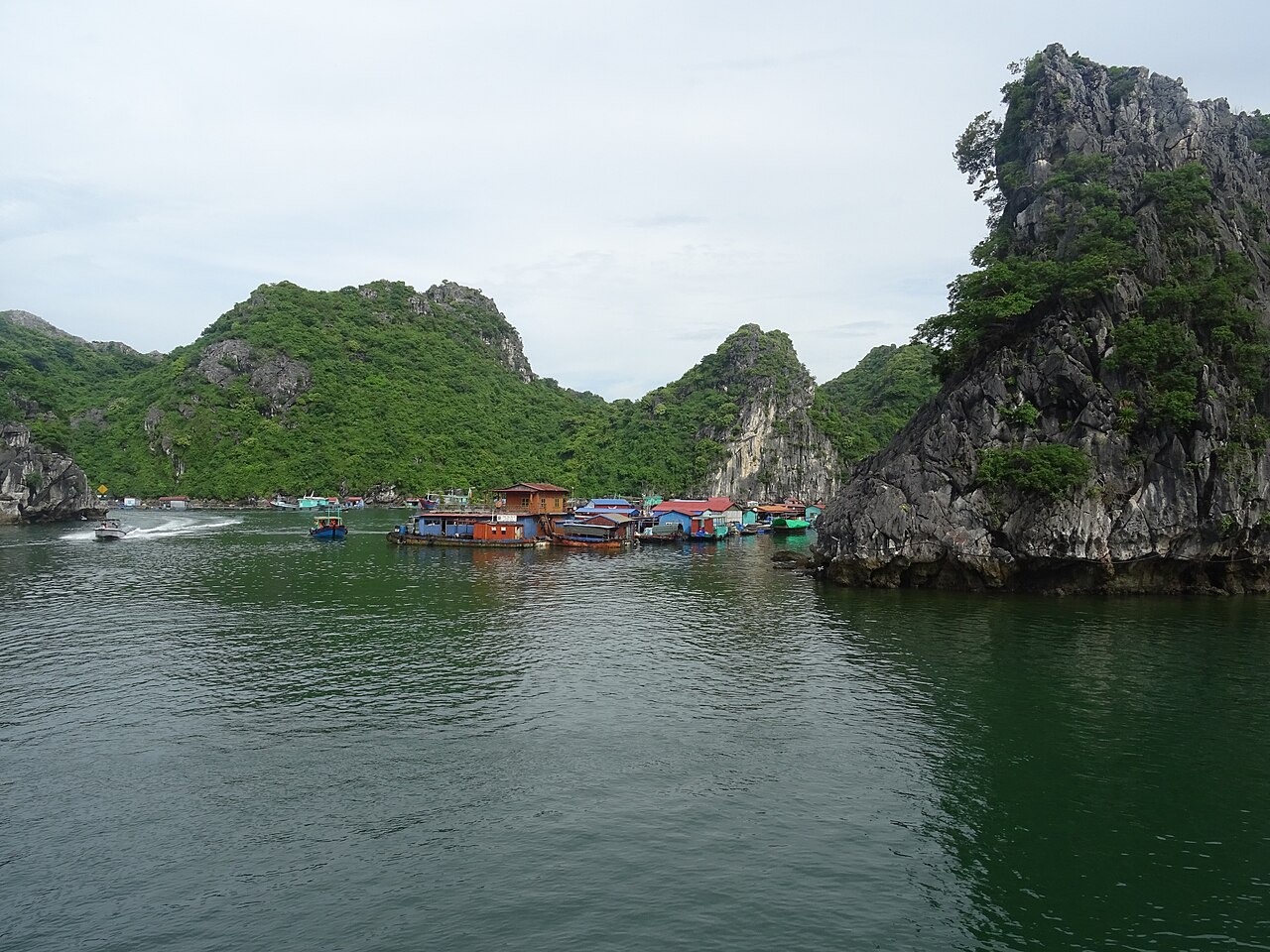
Morning: feeding fish and preparing for trade
Feeding is one of the most visible parts of life on a floating farm. The amount and timing depend on the fish species, their size, the season and the family’s farming method.
Residents observe how actively the fish feed. A sudden loss of appetite may indicate stress, disease or unsuitable water conditions. Uneaten feed can also affect water quality, so experienced farmers do not simply throw food into the cages without watching the response.
Nets and cage frames must be checked at the same time. Marine growth can reduce water circulation, while damaged sections may allow fish to escape.
If traders or restaurants are expecting an order, suitable fish are selected, weighed and prepared for transport. Boats provide the connection between the raft, Ben Beo Harbour and businesses on Cat Ba Island.
Cage aquaculture remains closely connected with household livelihoods around Cai Beo. Local reporting from Hai Phong describes families whose lives and income are tied to fishing grounds and floating seafood farms.
Breakfast happens beside the workplace
The distance between home and work may be only a few steps. A family cooks, eats and performs household tasks on the same floating structure used for fish farming, equipment storage and boat access.
Space must be used carefully. Feed needs to stay dry, tools must remain secure, and walkways cannot be blocked. Wet surfaces can become slippery, particularly after rain or when supplies have just been unloaded.
Domestic life continues alongside the farm: preparing meals, cleaning, washing clothes and caring for children or older relatives. The setting is unusual to visitors, but the responsibilities are familiar.
Travelling to shore
A boat functions like the family vehicle. It may carry children to school, adults to the market, drinking water back to the house and seafood towards buyers.
Supplies that land-based households can obtain easily require more planning on the bay. Depending on the household, these may include:
- Drinking and cooking water
- Rice, vegetables and household food
- Fuel, batteries or charging equipment
- Ice for preserving seafood
- Fish feed
- Nets, ropes and repair materials
- Medicine and personal necessities
Trips are often combined to save fuel and time. Someone may remain on the raft because fish cages, boats and equipment cannot always be left unattended.
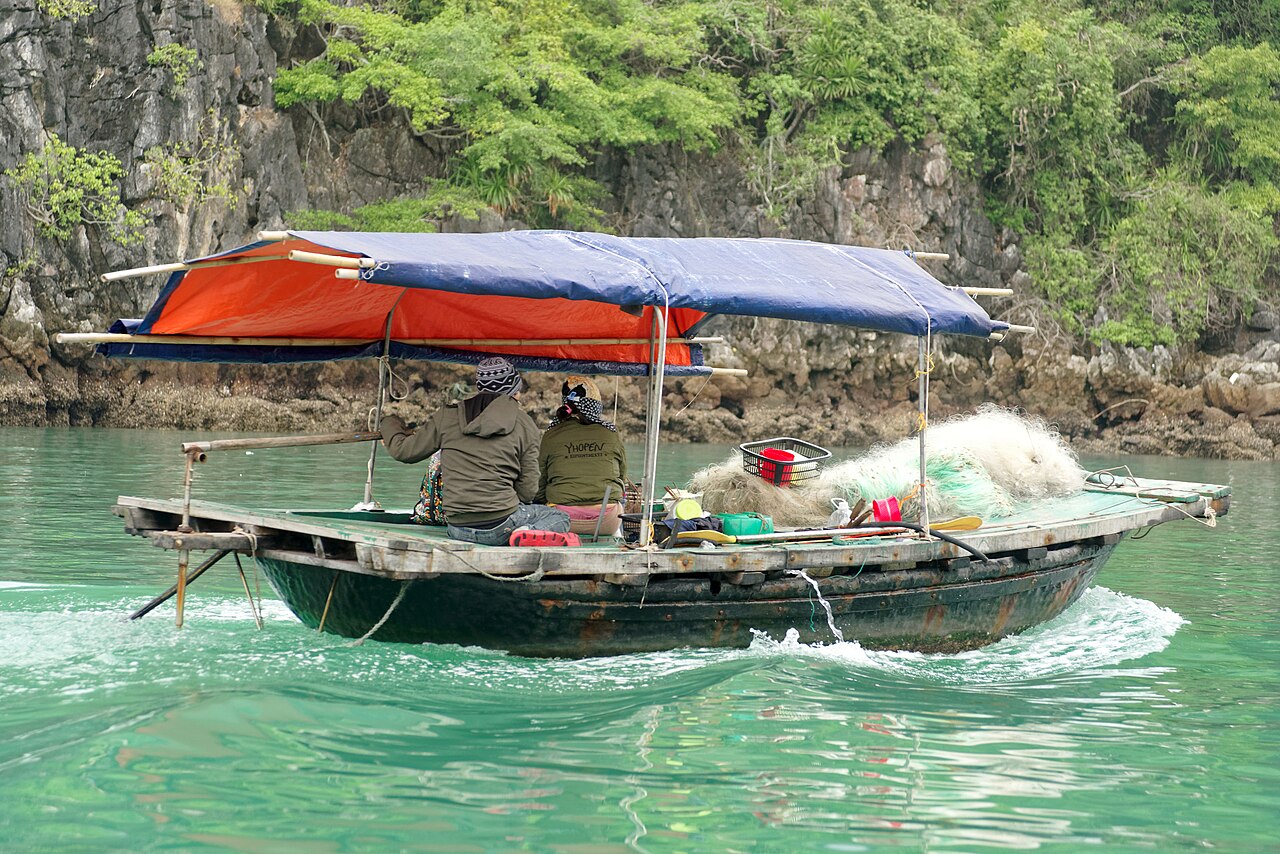
Midday: quieter water does not mean no work
The middle of the day may appear quiet, especially in hot weather, but there are still jobs to complete. Families clean equipment, mend fishing nets, inspect flotation units and repair wooden decking.
Salt water, sun and constant movement gradually weaken materials. A loose board or worn rope is easier to fix during calm conditions than during a storm.
Farm records, orders and expenses may also need attention. Modern floating households are not disconnected from the wider economy. They communicate with buyers, purchase supplies and respond to changing seafood prices like other small businesses.
Lunch provides a break, although urgent work does not always follow meal times. A delivery boat, damaged cage or changing weather can interrupt the routine.
Afternoon: another feeding and maintenance cycle
The fish may be checked or fed again later in the day. Nets are cleaned, cages inspected and stock observed for signs of injury or disease.
Sorting fish can involve separating them by size so larger animals do not dominate food or injure smaller ones. Farm practices vary, so visitors should avoid assuming that every cage or household operates identically.
The family may also repair the house itself. Floating structures require continuing maintenance because every section is exposed to humidity, salt and movement. Floats, joints, roofing, walkways and mooring points all need attention.
How tourism changes the afternoon
Tour boats often pass through Cai Beo on their way into Lan Ha Bay. For some families, tourism provides supplementary income through guided visits, seafood sales or other services.
A household may welcome guests by prior arrangement, demonstrate how a fish cage works or explain local life through a guide. However, the family has not stopped working simply because visitors arrive.
A floating farm is not a performance set. Feed bags, tools, nets, boats and household items remain visible because the structure is a genuine home and workplace.
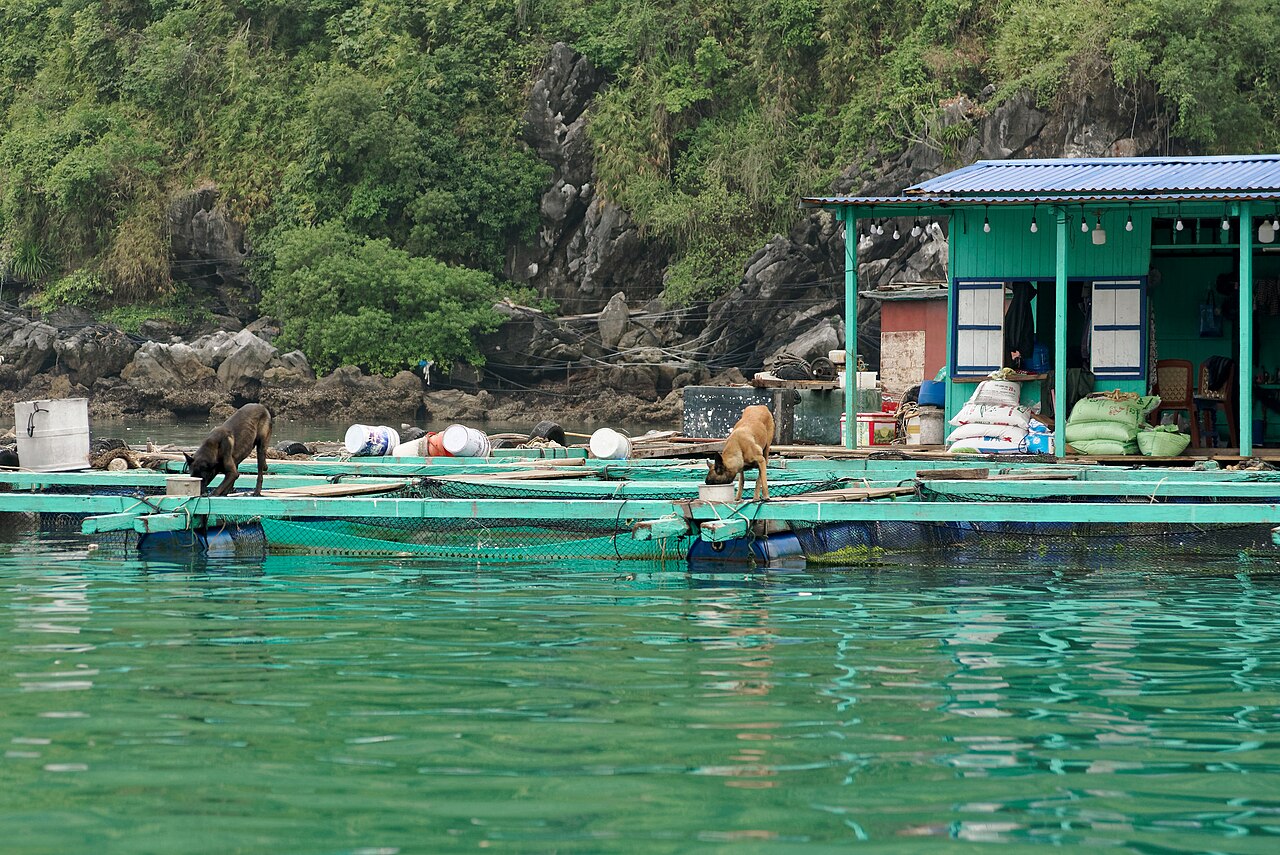
Before evening: preparing for weather
As daylight fades, residents secure tools and check the forecast. Boats are tied carefully, loose objects moved under cover and vulnerable equipment protected.
If strong wind or a storm is expected, normal routines give way to preparation. Families may add mooring lines, reinforce connections between raft sections and inspect every anchor point.
This work is essential because severe weather can damage the home, release farmed fish and remove a family’s source of income simultaneously.
Local knowledge helps residents recognise changes in the bay, but official weather warnings and management instructions remain important. Experience cannot make dangerous weather harmless.
Dinner and life after dark
Evenings can be quieter. Families cook, talk, repair smaller pieces of equipment or prepare for the next day. Sound travels easily over water: boat engines, dogs, fish moving inside cages and waves touching the platform become part of the night.
Electricity and mobile connectivity may be available, but reliability and arrangements vary by location. Fresh water and waste management also require more attention than in an ordinary house on land.
Some fishing continues after dark. Squid fishing, for example, has traditionally used lights to attract the catch, although practices and participation have changed over time.
A family member may wake during the night if weather deteriorates, a boat approaches or unusual movement is heard around the cages.
Roles are practical, not fixed
It is tempting to describe floating-village life through simple traditional roles, but real households are more flexible. Feeding fish, driving boats, trading seafood, repairing equipment, cooking and caring for relatives may be divided according to skill, age, availability and circumstances.
Younger generations may study or work in Cat Ba Town, while older family members continue managing the farm. Some households no longer live on the raft full-time, and others combine aquaculture with tourism or land-based work.
The community is changing rather than remaining frozen in the past.
What visitors often fail to notice
From a cruise, a floating home can appear isolated and effortless. In reality, the family continuously manages water, weather, transport, livestock and the physical structure beneath its feet.
The peaceful scene depends on labour:
- Fish remain healthy because someone monitors them.
- The raft stays level because floats and loads are checked.
- The house remains in position because anchors and ropes are maintained.
- Food and water are available because someone transports them.
- Storm damage is reduced because preparation begins early.
Understanding this work changes the way visitors see Lan Ha Bay. The floating community becomes more than a photograph against limestone cliffs; it becomes part of the bay’s living economy and culture.
How to visit respectfully
Visit only with permission or through a guide who has an established relationship with the household. Ask before taking close photographs, particularly of children or private living spaces.
Remain on the indicated walkway, supervise children and do not touch nets, feed fish or open cage covers without an invitation. Keep noise low and never leave rubbish behind.
The most meaningful visit is not the one that produces the greatest number of photographs. It is the one that helps travellers understand how much knowledge and work are required to build a life on water.