
Cat Ba Beyond · Fishing Life & Local Culture
What Makes Cat Ba’s Fishing-Village Culture Special?
Before hotels, cruises and kayaking tours appeared, Cát Bà was already home to communities that understood how to live from the sea. That knowledge can still be seen in a fisherman reading the wind, a family repairing nets beside its floating house or neighbours helping one another secure boats before a storm.
Cát Bà’s fishing-village culture is special because it is not simply a tourism attraction. It is a living relationship between people, water, limestone islands and generations of accumulated experience.
Cái Bèo connects the present with a distant past
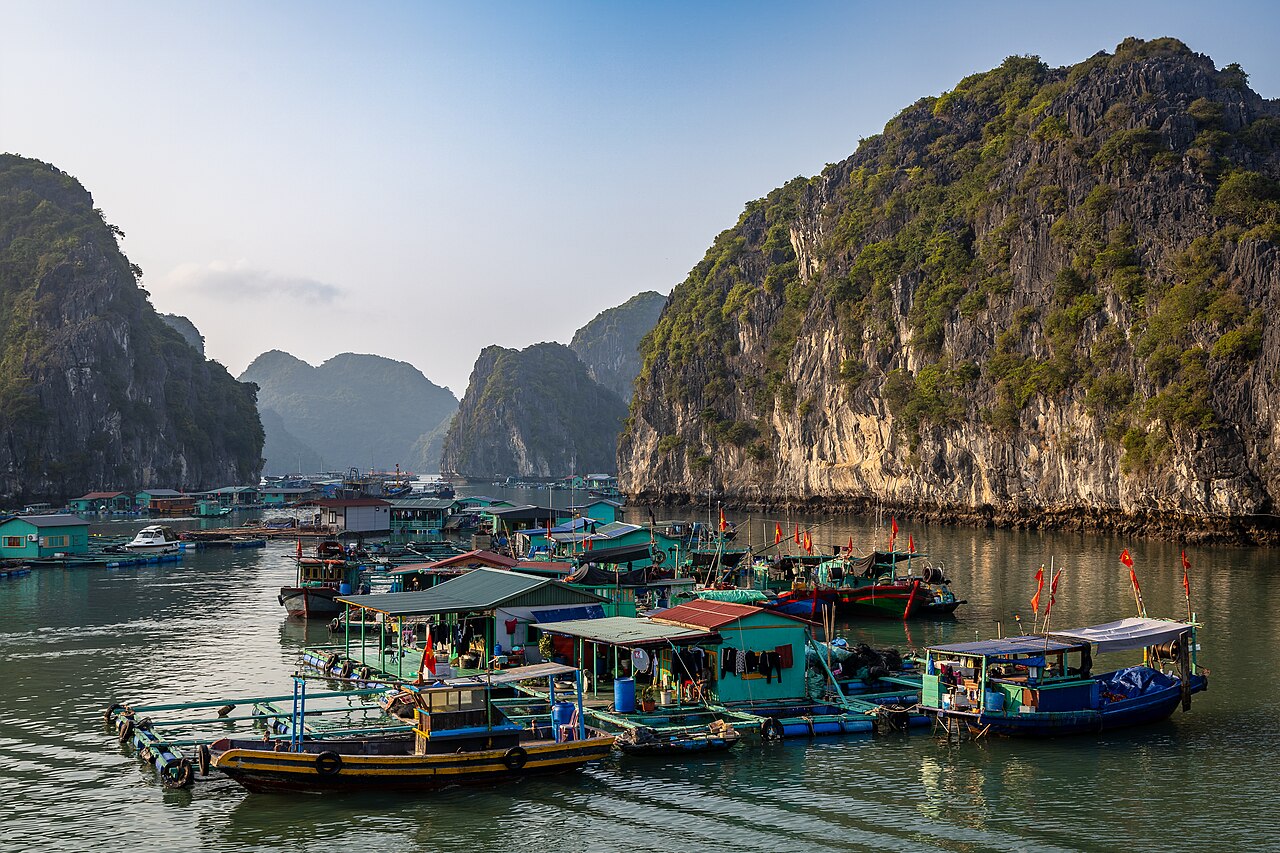
Cái Bèo is more than a picturesque floating village near Bến Bèo Pier. It is also an important archaeological location associated with ancient maritime life in northeastern Vietnam.
Excavations have uncovered stone tools, animal remains and shells. These finds indicate that people used coastal resources here thousands of years ago; heritage documentation discusses Cái Bèo among the area's prehistoric sites. Dating varies by excavation layer and source, so it is safer to describe a long maritime history than to assign one age to today's village.
The connection between those ancient communities and today’s residents should not be presented as a perfectly unbroken lifestyle. Fishing methods, boats, houses and economic conditions have changed repeatedly. What remains is the central role of the sea in food, work, transport and local identity.
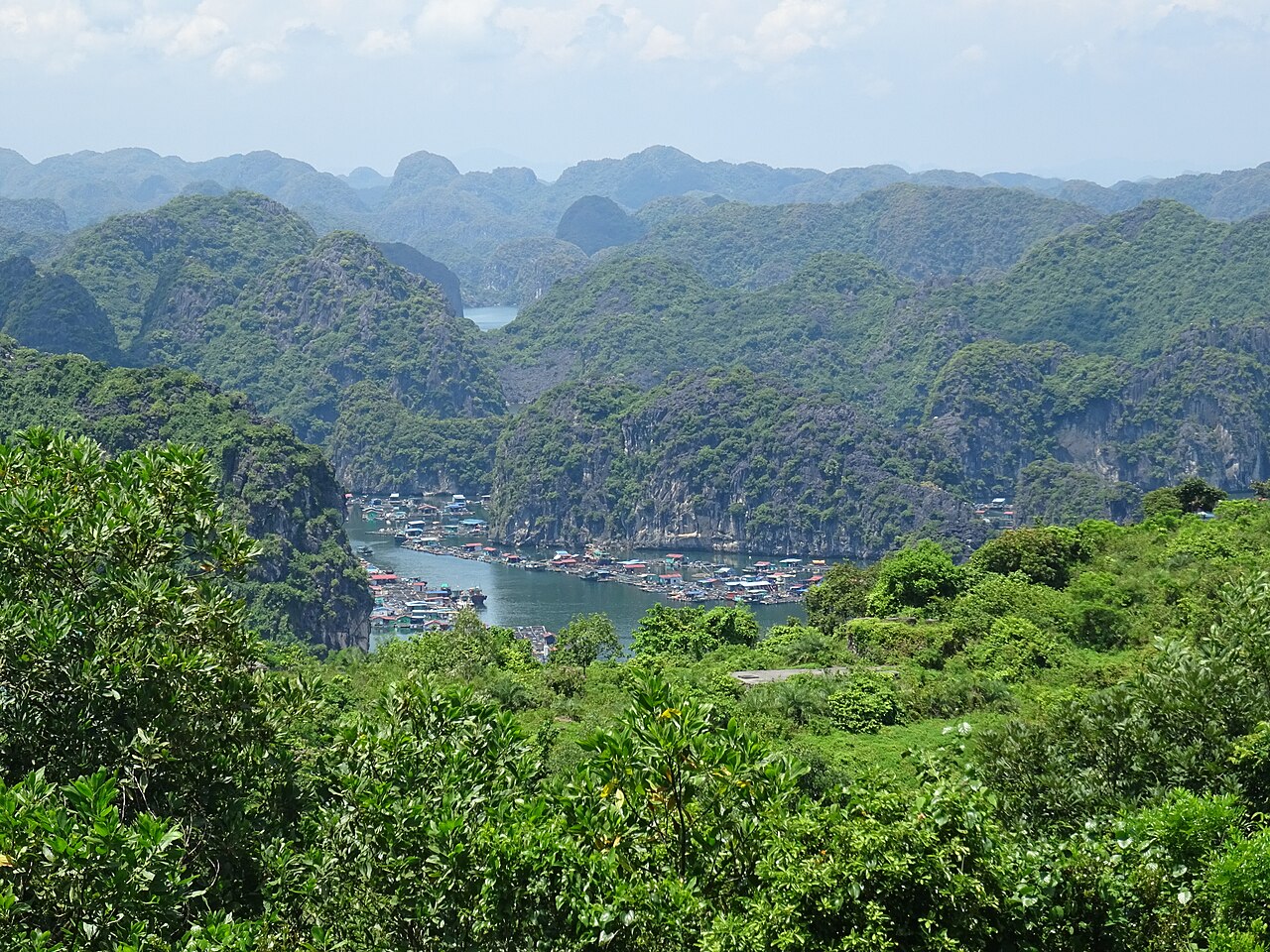
The sea is both workplace and teacher
Fishing-village knowledge was rarely learned from a textbook. Children watched adults repair nets, handle boats and observe changing weather. Experience taught people how to interpret currents, tides, wind direction and cloud formations.
Local knowledge includes:
- Steering small boats through limestone channels
- Selecting sheltered places to anchor
- Understanding seasonal fishing conditions
- Repairing nets and maintaining engines
- Building and securing floating platforms
- Raising fish in submerged cages
- Preparing for storms and rough weather
- Transporting freshwater and supplies
- Recognising locally important marine species
These skills are a detailed understanding of the marine environment. A guide who grew up around the bay may notice a changing current, an exposed rock or a safe passage that a visitor would miss.
Floating houses combine home and livelihood
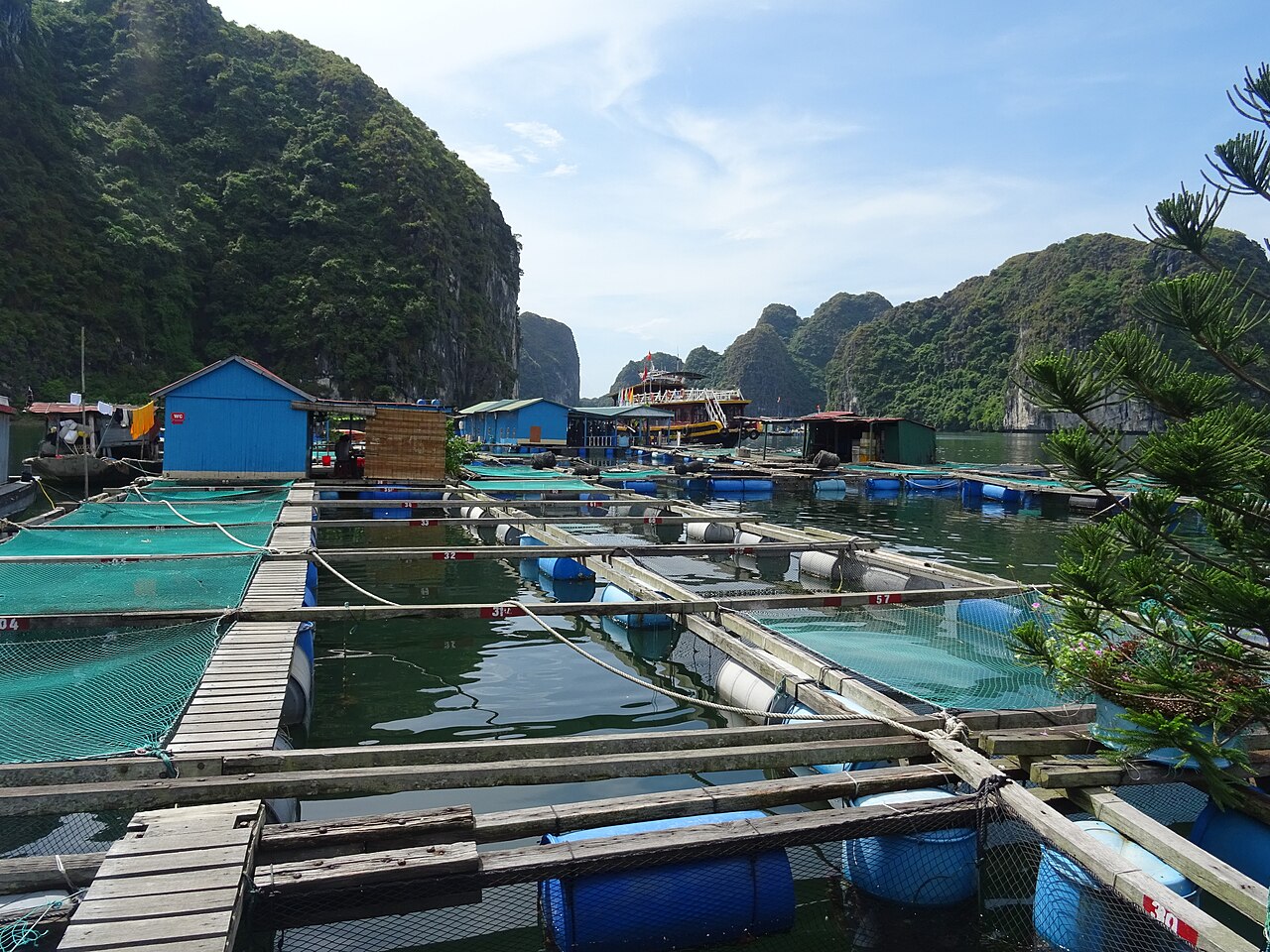
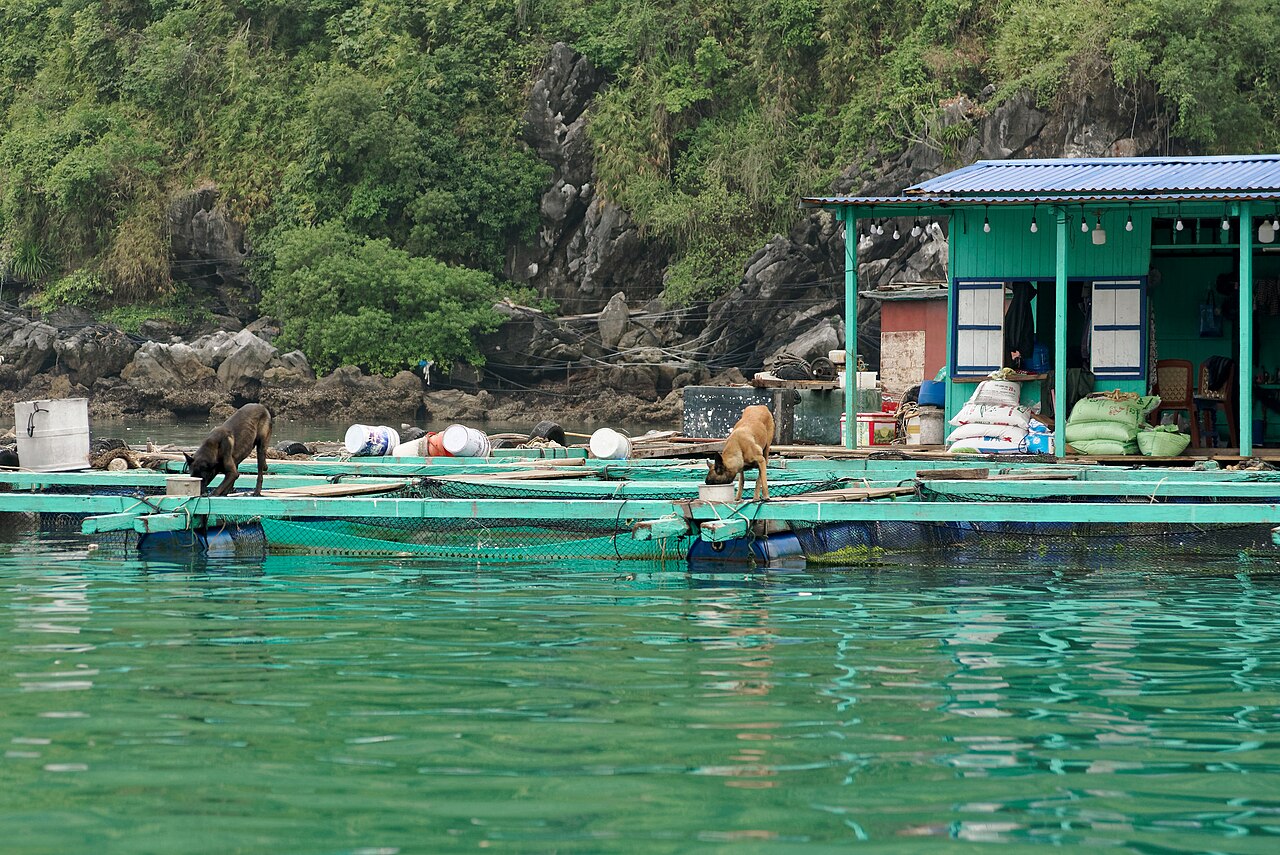
A traditional floating structure is not merely a house placed on the water. Its design reflects the needs of a working family. Living quarters occupy one part of the platform, while walkways connect fish cages, storage areas and the family boat. Nets hang beneath the surface, allowing seawater to circulate through cages containing grouper, cobia, sea bass or other species.
Every part has a function. Ropes connect the farm to fixed anchoring points. Buoyant units keep the frame above water. Boats provide access to school, markets, freshwater and medical care. A damaged rope or net can threaten both the household and its income. Home and work are not separated by a commute; they exist on the same platform.
Cooperation is essential
Life at sea rewards independence, but it also requires cooperation. Heavy ropes cannot always be handled alone. A broken engine may leave a family unable to reach shore. Before a storm, cages and boats must be secured quickly.
Neighbours traditionally exchange weather information, help move equipment, repair damaged structures and transport people or supplies. Traders, fishermen and aquaculture families also depend on one another. Fish travel from cages to restaurants and markets, while fuel, freshwater and food travel in the opposite direction. Visitors photograph individual houses, yet the community survives through relationships between them.
Boats carry both practical and cultural meaning
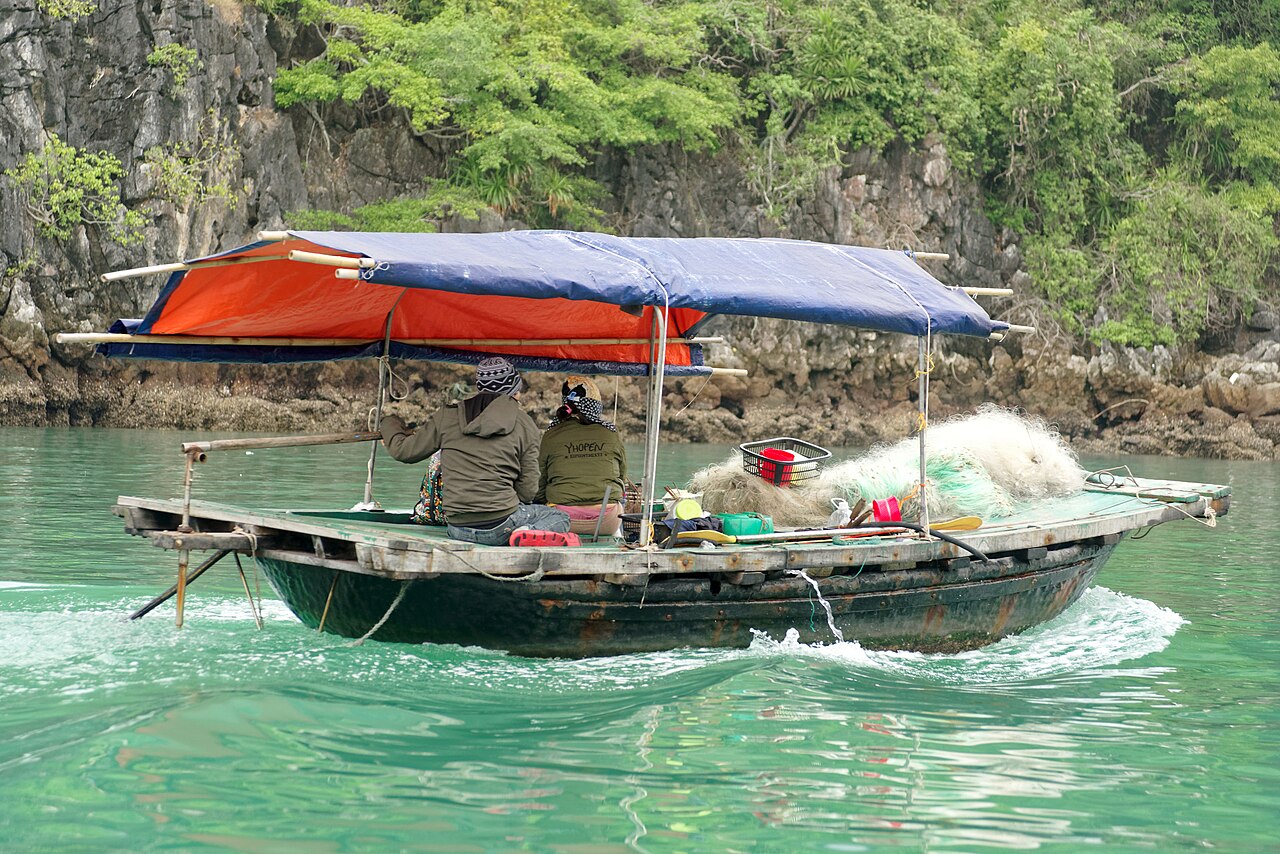
For a fishing family, a boat earns income, reaches land and responds to emergencies. It may carry children towards school, transport fish to buyers and help reinforce a neighbouring farm. Boat-handling skills are thus part of local identity.
They also appear in public celebrations. Vietnam's national tourism authority describes Cát Bà's traditional dragon-boat racing and associated water-based contests, including tug-of-war and basket-boat demonstrations. These events display teamwork, endurance and the island's maritime character. Coordinated paddling echoes the discipline needed by people working together at sea.
Beliefs reflect respect for an unpredictable sea
The sea provides food and income, but it can change without warning. Strong wind, fog, waves and tropical storms remain powerful forces in island life.
Fishing communities developed ceremonies and customs expressing hopes for safe voyages and successful work. Traditions may include prayers before a journey and respect for ancestors. These practices should not be treated as colourful performances created for tourists. They reflect the uncertainty of maritime life and the emotional weight carried by families waiting for relatives to return. People may know the sea well, but they do not control it.
Seafood carries local knowledge
Seafood culture in Cát Bà begins before a dish reaches a restaurant table. Residents distinguish species by appearance, habitat, season, texture and cooking method. A fishing family may know which fish is better steamed, which shellfish needs careful cleaning and which catch should be eaten promptly.
Recipes often favour direct preparation—steaming, grilling, boiling or hotpot—so fresh seafood remains recognisable. Traditionally, families cooked what they caught, raised, exchanged or could preserve. Dried seafood, fish sauce and simple soups helped households use marine resources efficiently. Modern menus offer more choice, but local food culture is strongest when it follows the season.
The local vocabulary is part of the heritage
Fishing communities develop specific words for fish, shellfish, equipment, weather and water conditions. A species may have a local name that does not translate neatly into English, and the same object can be called something different in another coastal province.
This vocabulary stores practical knowledge. Names can reveal appearance, behaviour or commercial use; weather expressions may communicate observations accumulated across generations. Guides who explain these words give visitors a more precise understanding than a generic English label can offer.
Fishing culture is changing
Cát Bà's fishing villages are not frozen in the past. Engines replaced much manual rowing. Mobile phones bring forecasts and contact with seafood buyers. Solar panels and batteries supply electricity to some floating households.
Tourism has created new occupations: boat captains, kayaking guides, cruise crew and seafood suppliers. At the same time, environmental rules and aquaculture planning have removed or relocated some floating facilities. More families now live ashore while continuing to work on the bay. These changes can improve access to education, healthcare and utilities, but may weaken the everyday transmission of knowledge about tides, nets and boats.
Conservation affects local culture
The Cát Bà Archipelago became a UNESCO Biosphere Reserve in 2004 and joined the expanded Ha Long Bay–Cat Ba Archipelago World Heritage property in 2023. These designations reinforce the need to protect biodiversity, water quality and the limestone landscape.
The area's heritage is also human. Fishing knowledge, floating architecture, festivals and seafood traditions deserve recognition. Conservation should involve local communities rather than treating them as a problem to remove from the scenery. Cleaner aquaculture and regulated tourism matter, but residents need fair opportunities to earn a living and share their knowledge. A bay without pollution is important; a bay without cultural memory would still represent a loss.
How can travellers visit respectfully?
- Choose a knowledgeable local guide
- Ask permission before entering a floating home or farm
- Do not touch cages, nets or equipment without approval
- Avoid close photographs of residents without consent
- Never feed farmed fish independently
- Buy local products from responsible businesses
- Listen to residents instead of treating them as scenery
- Avoid tours that stage intrusive encounters
- Follow waste and environmental rules on the bay
A respectful visit is not about collecting photographs of an “unchanged” village. It is about understanding how residents adapt to education, tourism, conservation and new economic realities.
A culture built on adaptation
What makes Cát Bà's fishing-village culture special is not that it has remained untouched. Its defining quality is adaptation. Ancient residents used coastal resources. Later generations developed wooden boats, floating homes and marine aquaculture. Today's families use engines, phones and solar power while working within new environmental rules and a tourism economy.
The tools have changed, but essential values remain: knowledge of the sea, respect for dangerous weather, skilful use of limited resources and cooperation between families. Cát Bà is often promoted through limestone cliffs and emerald water, yet the archipelago becomes more meaningful when visitors recognise the human culture shaped by that landscape.