
Cat Ba Beyond · Fishing Life & Local Culture
Where Do People Living on Lan Ha Bay Get Fresh Water?
A family living on Lan Ha Bay is surrounded by water, yet very little of it can be used for drinking, cooking or washing. Seawater contains too much salt, and converting it into fresh water would require equipment and energy that traditional floating households generally do not have.
Families have therefore depended on two practical solutions: collecting rainwater and purchasing fresh water transported from Cat Ba Island by boat.
Collecting rainwater from the roof
During rainy periods, the roof of a floating house becomes a valuable catchment surface. Gutters or channels guide the runoff into tanks, drums or other containers kept on the raft.
Rainwater is useful because it can be collected directly at the home without fuel or a journey to shore. A sufficiently large roof and storage tank allow a family to build a reserve for later use.
However, the amount collected depends on several factors:
- How often and how heavily it rains
- The size and condition of the roof
- Available storage capacity
- Water lost through leaks or overflow
- How many people use the supply
- Whether the water is suitable for its intended purpose
A long dry period can exhaust the stored supply quickly, particularly when water is also needed for cooking, cleaning and washing.
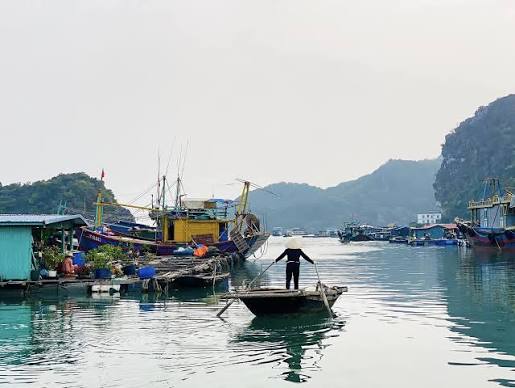
Why the first rainwater may be discarded
Dust, leaves, salt spray, insects and bird droppings can collect on the roof between rainstorms. The first water running across that surface may carry these contaminants into the storage system.
A well-managed rainwater system may divert this initial runoff before allowing cleaner rain to enter the tank. This is sometimes known as a first-flush system.
The CDC notes that rainwater is not automatically safe to drink and recommends maintaining collection systems, keeping debris out and diverting the first runoff when possible.
The roof, gutters and storage containers also require regular cleaning. A damaged gutter wastes water, while an uncovered tank can allow dirt, insects or animals to enter.
How is rainwater stored on a floating raft?
Storage arrangements vary between households. Water may be held in tanks, drums or sealed containers positioned where their weight can be supported safely.
A large quantity of water is heavy. On a floating structure, its location affects the balance of the entire raft. Containers must therefore be secured so they cannot move as the house rises and falls with waves.
Storage tanks should remain covered and protected from contamination. WHO technical guidance for rainwater systems recommends clean gutters, covered tanks, debris filters and appropriate management of the first runoff.
Residents must also watch for leaks. Losing water at a house on land is inconvenient; losing a stored supply on the bay can mean arranging another boat delivery.
Buying fresh water from vendors
Rainwater alone is not dependable throughout the year. When the stored supply runs low, families can purchase fresh water brought from land.
Supply boats or floating vendors transport water from Cat Ba and transfer it into household containers. Boats serving floating communities may also carry fuel, ice, food and other necessities. A visitor description of Cai Beo notes supply rafts selling fresh water alongside diesel and ice.
The transaction turns water into part of the household budget. Families are paying not only for the water itself but also for its storage and transportation across the bay.
Delivery depends on:
- Boat availability
- Distance from the shore
- Weather and wave conditions
- The household’s storage capacity
- The quantity ordered
- Access around neighbouring rafts and cages
For homes farther inside the bay, planning becomes particularly important. Waiting until every container is empty can leave the family vulnerable if poor weather delays the supplier.
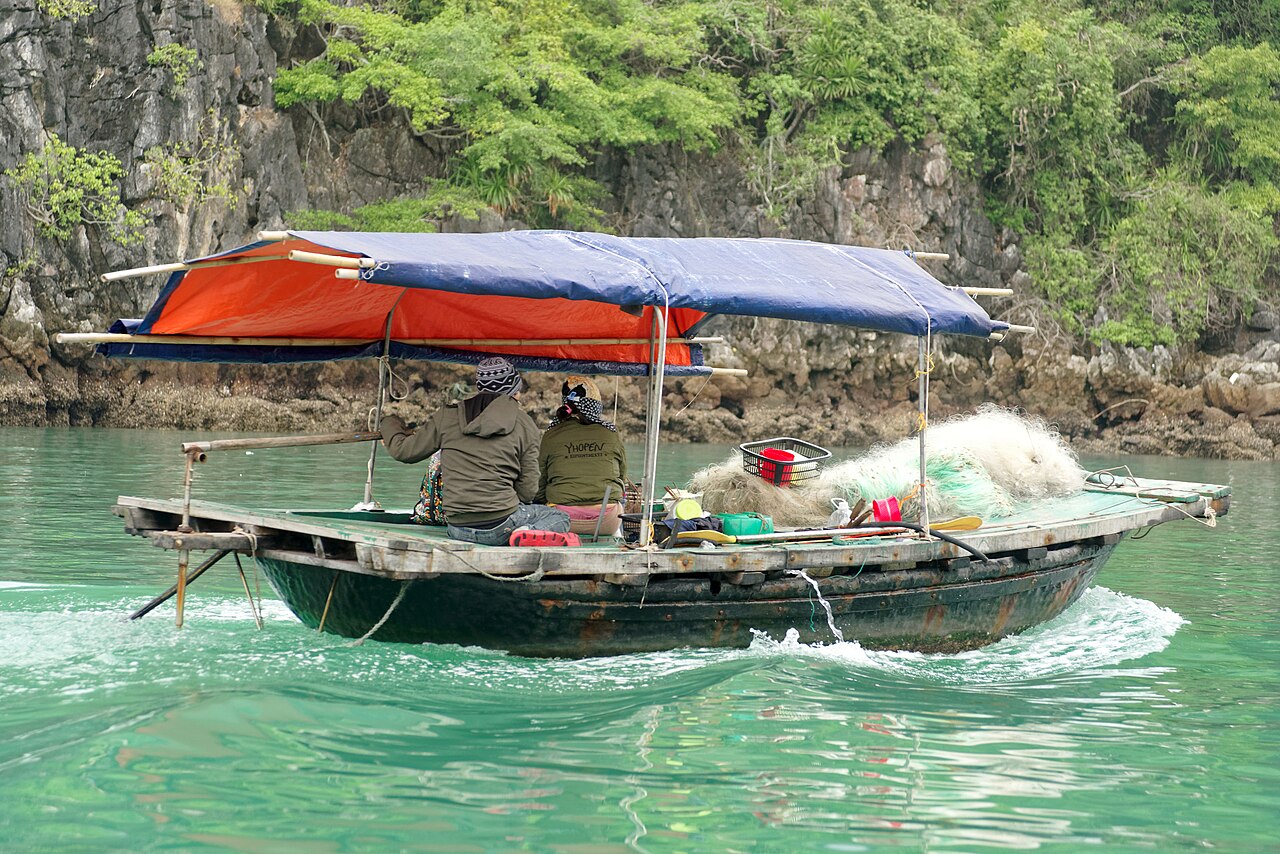
Is all delivered water safe to drink?
Not necessarily. “Fresh water” means that the water is not seawater, but it does not by itself confirm drinking-water quality.
A household may use different water sources for different purposes. Water suitable for washing a deck or cleaning equipment may not meet the standard needed for drinking, preparing food or brushing teeth.
Residents may use bottled water or appropriately treated water for consumption. The correct treatment depends on the source and possible contaminants. Boiling can control many germs, but it does not remove every chemical contaminant. Travellers should therefore follow local health advice rather than assuming that any clear-looking water is safe.
How do families conserve water?
When every litre must be collected or purchased and transported by boat, water conservation becomes part of daily life.
Families may:
- Repair leaking containers quickly
- Keep stored water covered
- Use different supplies for drinking and cleaning
- Wash equipment with only the necessary amount
- Plan water purchases before dry periods
- Collect rain whenever suitable conditions occur
- Monitor how much remains in each tank
This does not mean that every household follows exactly the same system. Family size, income, location, storage and access to suppliers all influence water use.
What happens before a storm?
A storm can provide rain but also contaminate or damage a collection system. Strong wind may carry salt spray and debris onto the roof, while violent movement can loosen gutters, lids or storage containers.
Before severe weather, residents secure tanks and check that containers cannot slide across the raft. After the storm, roofs and gutters may require cleaning before water collection resumes.
If a tank has been contaminated, the water should not automatically be used for drinking. Cleaning, testing or appropriate treatment may be necessary.
Why visitors should understand this system
A visitor may enter a floating home, wash their hands or request another drink without considering how that water reached the raft. Unlike a hotel connected to a municipal supply, the household may have collected it one storm at a time or paid for a boat to deliver it.
Visitors should avoid wasting water and should not open tanks, touch collection equipment or assume that every tap provides potable water. If offered water, ask whether it is intended for drinking.
Fresh water reveals an important side of life on Lan Ha Bay. Floating architecture may attract attention, but the community survives through less visible systems: storage, transport, maintenance and careful daily decisions.