
Cat Ba Beyond · Activities
Why Can Some Caves and Lagoons Be Entered Only at the Right Tide?
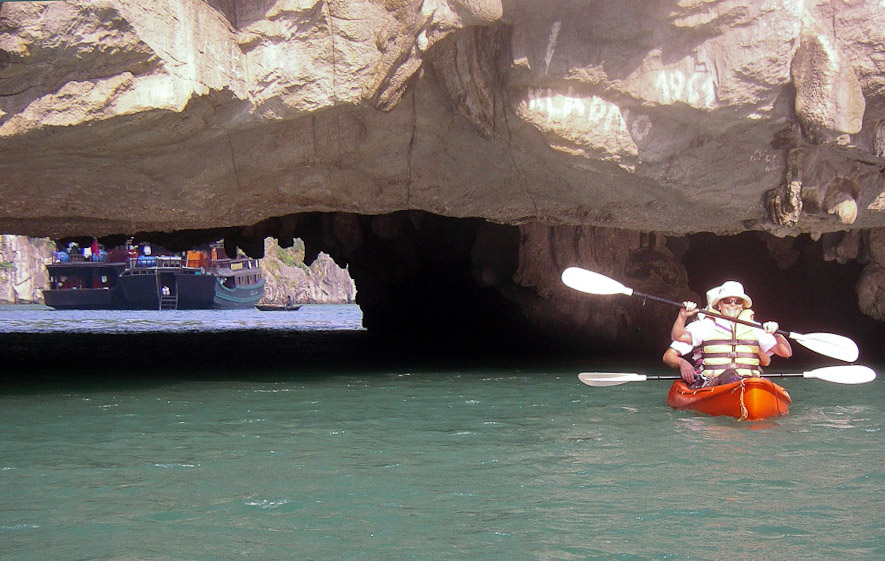
A narrow cave opens beneath a limestone cliff. Beyond it lies a quiet lagoon, yet your guide says it cannot be entered today. The water may look calm, but access depends on more than weather. The tide changes water depth, clearance beneath the ceiling and the current through the opening. Choosing the right window is a safety decision, not merely a convenience.
How were these hidden lagoons formed?
Lan Ha Bay belongs to the Ha Long Bay–Cat Ba Archipelago, a limestone landscape later invaded by the sea. Water entered valleys, depressions and caves, forming marine lakes and lagoons. Some remain connected to the bay by short, low passages.
UNESCO describes the World Heritage property as an extensive marine-invaded tower-karst landscape with caves and drowned depressions; some lakes are tidal. As the outside water rises or falls, connected passages change too. An entrance that appears spacious now may be too low, shallow or fast-flowing later.

What happens at high tide?
At high water, the surface approaches the cave roof. A large boat may have lost access earlier; eventually even a kayak or bamboo boat may lack safe headroom. A small wave, wake or sudden movement can lift a kayak toward the rock. Reaching upward instinctively risks hand or head injury. Irregular ceiling sections and formations may reduce space further.
A guide must judge clearance along the whole tunnel, not only at the entrance. It may become lower or narrower a few metres inside.
Why is the lowest tide not always best?
Low water increases vertical clearance but can leave too little depth to float. Rocks, mud, oyster-covered surfaces or sensitive habitats may become exposed. A kayak can ground, while dragging or pushing it may damage gear and the environment. For a particular cave, a moderate level may be safest: enough headroom above and enough water beneath. Every passage has a different profile.
How does the tide affect the current?
Water moving into or out of a lagoon may be forced through a narrow opening, making the flow stronger there than in open water. It can turn a kayak sideways, press it toward rock or make the return difficult. Wind and waves outside the opening add risk. NOAA explains that tidal currents can accelerate in narrow inlets and straits.
Direction and timing matter too: a gentle inward flow during entry may change later. A local guide assesses the opening, the route and the group's ability before proceeding; no general tide-table number guarantees safety at every cave.
Why can an itinerary change at the last minute?
Tide predictions guide planning, but wind, waves, visibility and harbour instructions also shape the final decision. A reputable tour treats cave and lagoon visits as condition-dependent. If one passage is unsuitable, the guide may choose another kayaking area, use open water or change the order of activities. Responding to the conditions is safer than forcing the advertised sequence.
Can the same cave open and close on one day?
Yes. A passage may be accessible in the morning and unsuitable later as water rises. The useful window changes from date to date. Another traveller's photograph or review cannot establish conditions for your visit. Even a kayak that entered shortly before yours does not prove the passage remains safe for your group. Be wary of a guarantee to enter one named cave regardless of tide.
How should visitors enter a tidal cave safely?
Follow the guide and crew. Wear a correctly fitted life jacket, stay seated and keep hands inside the kayak rather than bracing against the roof. Secure phones and cameras in a waterproof bag. Do not enter alone, race another kayak or continue after a closure signal. Tell the guide before launching if enclosed or dark spaces make you uncomfortable; a locally rowed boat may be a better fit when available.
Give wildlife and rock formations space. Avoid shouting, touching formations, feeding animals or scraping a paddle along the wall.
Is missing a cave disappointing?
It may be, but Lan Ha Bay also has sheltered paddling areas, limestone corridors, floating communities and open lagoons. A knowledgeable guide can explain why the route changed and choose a safe alternative. The best trip is not the one that forces every cave entrance; it is one that reads the bay correctly.